

Paint Calculator
Estimate how much paint you need. Calculate the gallons of paint required for your walls, ceiling, and trim for any room in your house. Professional-grade accuracy for your home projects.
Share This Professional Calculator
Found this helpful? Share it with your network to assist them with their home improvement projects.
Recommended Professional Tools
Precision-engineered calculators to streamline your most critical home project decisions.
Expert Guide to Paint
Step-by-Step Instructions
- 1
Step 1: Quantify Wall and Ceiling Perimeter
Accurately measure the total length of all walls in the room. Sum these measurements to find the perimeter. For ceilings, measure the total square footage of the floor area. Professional estimation requires accounting for every surface that will receive a coating, including architectural features like soffits or alcoves.
- 2
Step 2: Determine Vertical Surface Height
Measure the height of the walls from the floor to the ceiling. Standard residential heights typically range from 8 to 10 feet. If you have vaulted or tray ceilings, measure the highest and lowest points to find a weighted average, or calculate the triangular sections independently for maximum precision.
- 3
Step 3: Subtract Non-Painted Apertures
Identify and subtract the square footage of all windows, doors, and other large openings. An industry-standard "shortcut" is to subtract 20 square feet for a standard door and 15 square feet for a standard window. For large sliding glass doors or floor-to-ceiling windows, measure the actual dimensions for a more accurate deduction.
- 4
Step 4: Factor in Surface Porosity and Texture
Evaluate the condition of the substrate. New, unpainted drywall or heavily textured surfaces (like knockdown or popcorn) can require up to 25% more paint than smooth, previously painted walls. If you are changing from a dark to a light color, you must also factor in a high-hide primer coat to ensure the final color is true and uniform.
- 5
Step 5: Apply Multi-Coat Methodology
Define the number of coats required for the job. While "One-Coat" paints exist, industry professionals almost universally recommend two coats for optimal sheen uniformity, durability, and color depth. Our calculator allows you to multiply your base area by your required coat count to find your total gallon requirement.
- 6
Step 6: Review Final Gallon and Quart Estimates
Analyze your final results. Our tool provides the total volume in gallons and breaks it down into quarts for smaller projects. We recommend rounding up to the nearest whole gallon to ensure you have enough material for "boxing" and future maintenance touch-ups.
Pro Tips & Analysis
The hallmark of a high-end, professional paint job is Surface Preparation and Priming. Most homeowners underestimate the impact of the underlying substrate on the final result. Paint coverage rates provided by manufacturers are based on a "sealed" surface with ideal porosity. If you are applying paint to new drywall, bare wood, or masonry, the initial coat will "wick" into the material, dramatically reducing your coverage—often to as little as 200 sq ft per gallon. Professionals mitigate this by applying a specialized Primer-Sealer. This not only seals the surface and provides a uniform "tooth" for the topcoat but is also significantly less expensive than the colored finish paint, saving you money on your total project cost.
Equally critical is the selection of the correct Paint Sheen (Finish) for the environment. Sheen levels range from Flat/Matte to High-Gloss, and each has specific performance characteristics. Flat paints are excellent for hiding surface imperfections in drywall but are difficult to clean and shouldn't be used in high-traffic areas. Semi-gloss and Gloss finishes are extremely durable and moisture-resistant, making it mandatory for kitchens, bathrooms, and trim, but their high reflectivity will highlight every minor bump or ding in your wall. When using our calculator, consider that higher sheens often require a more meticulous application technique to avoid "lap marks" and visible brush strokes. We recommend a "Satin" or "Eggshell" finish for most residential living spaces to balance durability with aesthetic appeal.
Finally, professionals utilize the "Boxing" Technique to ensure color consistency. Even with modern computer-tinting technology, there can be miniscule variations in color between individual gallon cans of the same paint. To eliminate the risk of a visible color shift in the middle of a wall, professionals pour all the gallons for a single room into a 5-gallon bucket and mix them together. This ensures a perfectly uniform color across every square inch of the project. Our calculator provides you with the exact gallon count so you can determine if "boxing" is necessary for your specific room dimensions. Always retain at least one quart of the "boxed" paint in a labeled container for future touch-ups, as this specific blend is unique to your project.
Scientific Calculation Methodology
The calculation determines the net surface area by subtracting openings from the total wall area, then divides by the standard coverage rate (350 sq ft/gal) and multiplies by the number of coats.
Practical Example:
For a 12x15 room (54 ft perimeter) with 9-ft ceilings, 2 windows, and 1 door: [(54 × 9) - (2 × 15) - 20] / 350 = 1.25 gallons per coat. For two coats, you need 2.5 gallons (order 3 gallons).
Achieving Precision Results
Store your leftover paint in a cool, dry place and use "Plastic Wrap" under the lid to create an airtight seal for long-term preservation.
Always "Cut-In" the edges of a wall first with a high-quality sash brush before using a roller to fill in the large field areas.
Maintain a "Wet Edge" by overlapping each stroke with the previous one; this prevents visible lap marks once the paint dries.
Invest in "Microfiber Rollers" for a smoother finish and better paint pickup compared to standard polyester rollers.
If you are painting over oil-based paint with water-based (latex) paint, you MUST use a specialized "Bonding Primer" or the new paint will peel.
Remove painter's tape while the paint is still slightly damp (the "tacky" stage) to prevent the dried film from tearing or lifting.
In high-humidity bathrooms, look for paints with built-in "Antimicrobial Agents" to prevent the growth of mold and mildew on the surface.
Clean your brushes and rollers immediately after use with warm, soapy water (for latex) or mineral spirits (for oil) to ensure they remain soft for the next project.
Technical Fast Facts
- ✓The industry standard coverage rate for interior paint is 350-400 square feet per gallon.
- ✓Porous surfaces like new drywall or masonry require 20% to 30% more material.
- ✓Architectural sheens range from Flat (lowest reflection) to High-Gloss (highest reflection).
- ✓One gallon of paint weighs approximately 11-12 pounds depending on the solids content.
- ✓Two coats of paint provide nearly double the "Scrub Resistance" and durability of a single coat.
Expert Q&A
Explore Related Tools
Precision tools to complement your current calculation.
Drywall
Estimate your drywall project materials. Calculate the number of drywall sheets, screws, and joint compound you need for your walls or ceiling.
Flooring
Calculate the square footage of flooring needed for your project. Works for tile, laminate, or hardwood, including a vital waste factor.
Siding
Estimate the total siding material needed for your home. Calculate the squares of vinyl, fiber cement, or wood siding for your project.
Wallpaper
Calculate the number of wallpaper rolls you need. Our estimator accounts for pattern repeat and waste, ensuring you buy the right amount.
In-Depth Guides
Expert insights and advice to help you make informed home decisions.
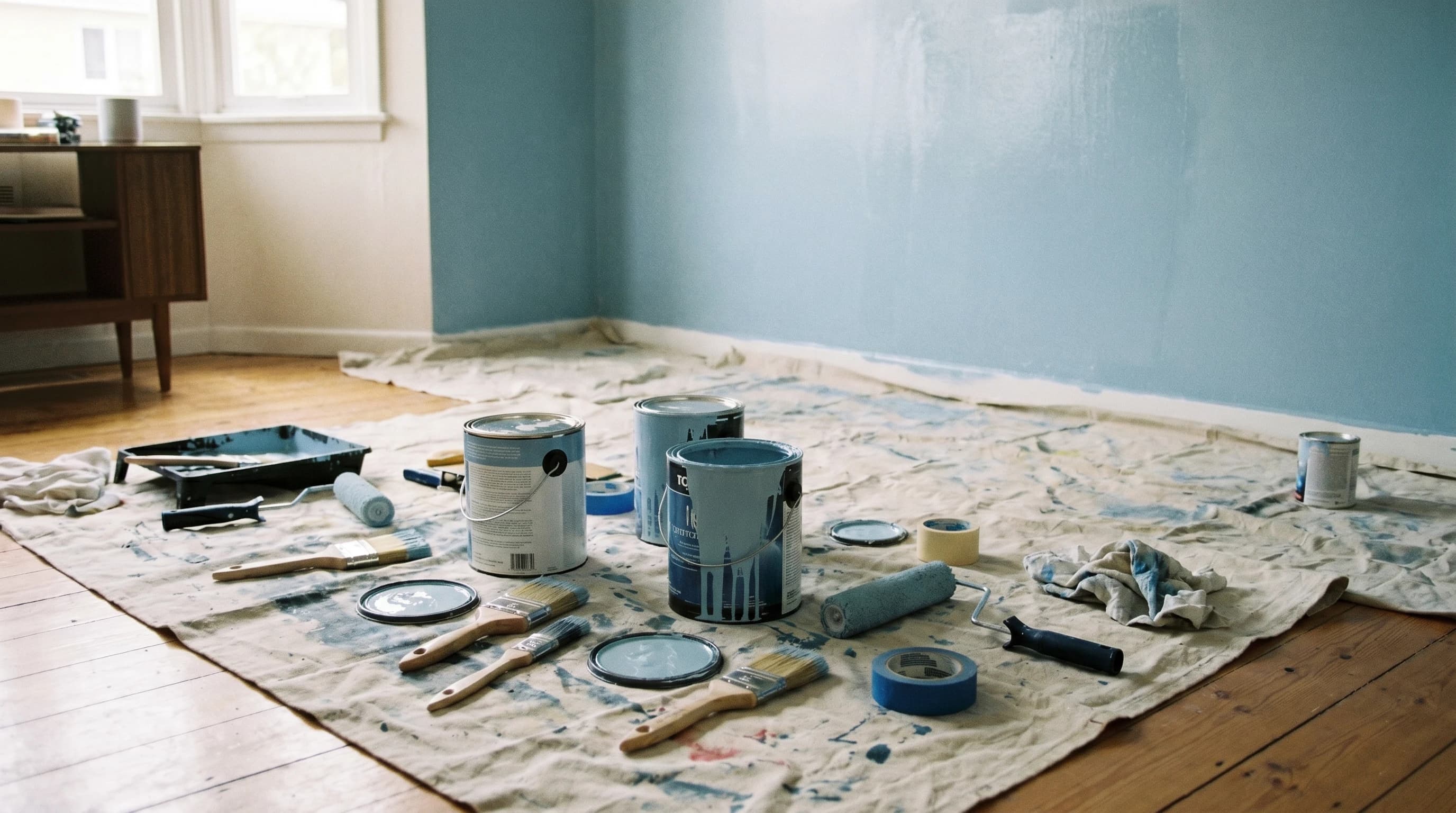
Paint Calculator Truth: Why 'Coverage' on the Can is Usually Wrong in 2026
Discover why the square footage on the paint can is a best-case scenario and how to calculate your real-world needs in 2026.
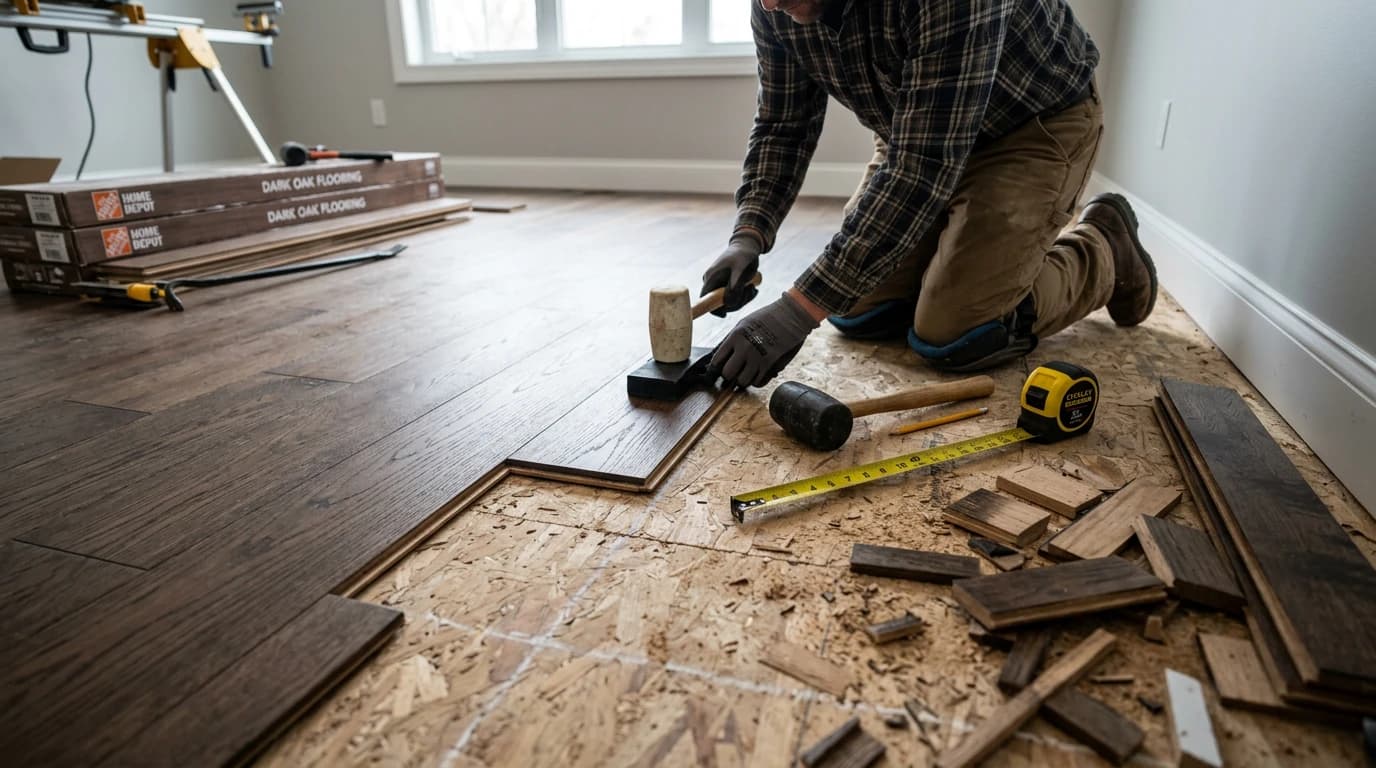
Flooring Waste Factor: Why You Need 10-15% Extra in 2026
Don't run out of flooring in 2026. Learn why you need 10-15% extra for waste, and why diagonal patterns or tile can require 20% or more.
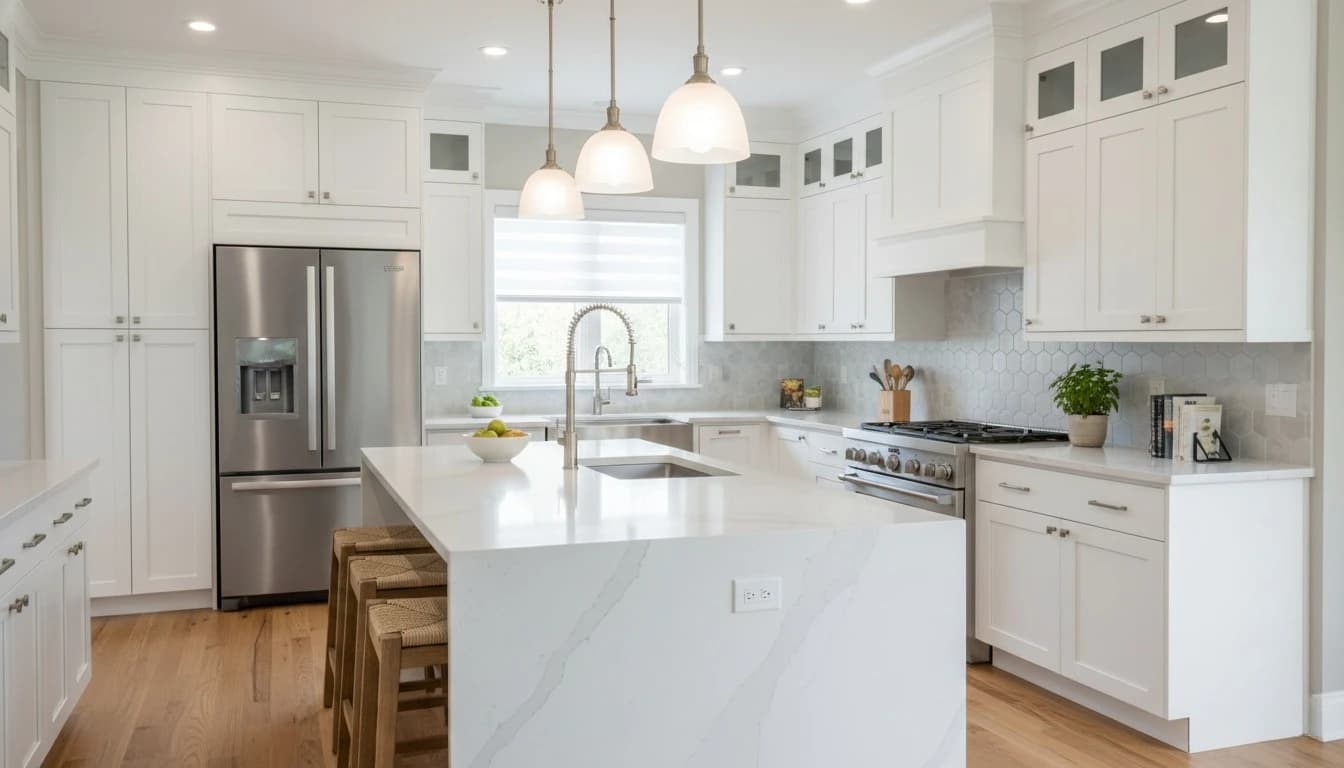
Kitchen Remodel Cost Guide 2026: Budgeting for Your Dream Space
The complete breakdown of kitchen renovation costs in 2026. From custom cabinetry to smart appliances, know where every dollar goes.