

Brick Calculator
Estimate the number of bricks and amount of mortar needed for your wall or patio project. Accounts for joint thickness and waste. Professional-grade accuracy for your home projects.
Brick Calculator
Estimate the number of bricks and amount of mortar needed for your wall or patio project. Accounts for joint thickness and waste.
Share This Professional Calculator
Found this helpful? Share it with your network to assist them with their home improvement projects.
Recommended Professional Tools
Precision-engineered calculators to streamline your most critical home project decisions.
Expert Guide to Brick
Step-by-Step Instructions
- 1
Step 1: Measure Wall Dimensions
Calculate the total square footage of the wall (Length x Height). Subtract any windows or doors.
- 2
Step 2: Select Brick Size
Choose your brick type (Standard/Modular is 2.25" x 8", Queen, or King size). This significantly changes the number of bricks per square foot.
- 3
Step 3: Define Mortar Joint Width
The standard joint is 3/8-inch. A wider joint means you need fewer bricks but more mortar.
- 4
Step 4: Choose Wall Thickness
Identify if you are building a "Single Wythe" (one brick thick) or a "Double Wythe" (two bricks thick) wall.
- 5
Step 5: Review Material Summary
The tool provides the total brick count, bags of mortar, and tons of sand needed.
Pro Tips & Analysis
The most important technical aspect of brickwork is the Mortar Joint. The mortar is not just "glue"; it is a cushion that accounts for small variations in brick size and allows the wall to breathe. A standard 3/8-inch joint is used because it provides the perfect balance of strength and workable "plasticity." When calculating bricks, you must account for the area of the joint. For modular bricks, the standard is 6.75 bricks per square foot. Our calculator handles this geometry automatically. Additionally, focus on the Mortar Type. Type N mortar is the general-purpose standard for residential walls, while Type S is used for load-bearing walls or projects in contact with the ground. Using the wrong mortar can lead to "Efflorescence"—that white, powdery salt that appears on brick faces when moisture moves through the wall incorrectly.
Another vital consideration is the Bond Pattern. A "Running Bond" (staggered joints) is the simplest and most common. However, patterns like "English Bond" or "Flemish Bond" involve alternating "headers" (bricks turned sideways) and "stretchers" (bricks laid long-ways). These patterns require more cutting and can increase your waste factor to 15%. Our tool provides a baseline count for running bond, so adjust your order if you are attempting a more complex architectural design. Finally, don't forget about Wall Ties and Weep Holes. If you are building a brick veneer over a wood frame, you must use metal "wall ties" every 2 feet to secure the brick to the house. You must also include "weep holes" (open joints) at the bottom to allow any moisture trapped behind the brick to escape. Our tool helps you with the bricks, but these engineering details are what prevent your wall from collapsing or causing rot in your home.
Scientific Calculation Methodology
The number of bricks is the wall area divided by the (Brick Area + Joint Area).
Practical Example:
A 100 sq ft wall with modular bricks and 3/8" joints: 100 / 0.148 = approx 675 bricks.
Achieving Precision Results
Always buy all your bricks at once from the same "Batch" to ensure the color and texture are uniform.
Keep your bricks dry before use; if they are too wet, they will "float" on the mortar and the wall will be unstable.
Use a "Joiner" tool to compress the mortar joints after they have partially set; this makes the joint waterproof.
Install "Wall Ties" every 16 inches horizontally and 24 inches vertically for a secure brick veneer.
Clean your brick face with a stiff brush and water as you go; removing dried mortar later requires harsh acids.
Technical Fast Facts
- ✓A standard modular brick measures 2.25" x 3.625" x 7.625".
- ✓There are approximately 6.75 modular bricks per square foot of wall.
- ✓One 80lb bag of mortar will lay approximately 35-40 standard bricks.
- ✓A 3/8-inch mortar joint is the industry standard for strength and aesthetics.
- ✓Type N mortar is the most common for non-load bearing residential walls.
Expert Q&A
Explore Related Tools
Precision tools to complement your current calculation.
Driveway Materials
Estimate gravel, concrete, or asphalt needed for a new driveway. Includes base material and top layer calculations.
Concrete
Calculate concrete volume in cubic yards and bags. Our concrete slab calculator makes it easy to estimate materials for your patio or footing.
Gravel
Calculate the amount of gravel or crushed stone you need. Get project estimates in cubic yards and tons for any landscape or driveway project.
Roofing Materials
Estimate your roofing materials needs. Calculate the number of shingle bundles and roofing squares required based on your roof's area and pitch.
In-Depth Guides
Expert insights and advice to help you make informed home decisions.

Foundation Footing Depth for Cold Climates: 2026 IRC Rules
A deep dive into 2026 IRC requirements for foundation footings in cold climates. Learn about frost line maps, thickened slab edges, and protecting foundations from frost heave.
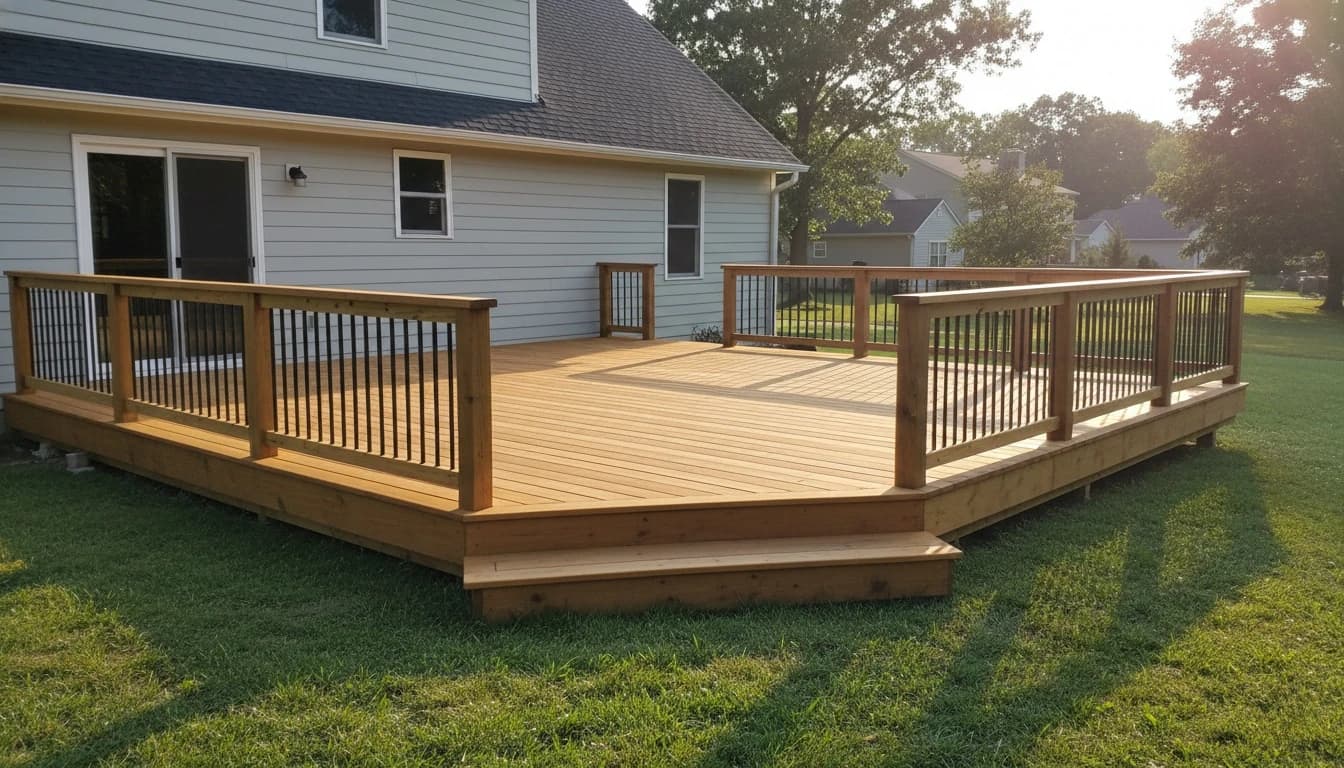
Deck Footing Depth 101: 2026 Guide to Digging Below the Frost Line
Learn the fundamental rule for deck construction in 2026: digging footings below the local frost line. We cover 2026 IRC requirements.
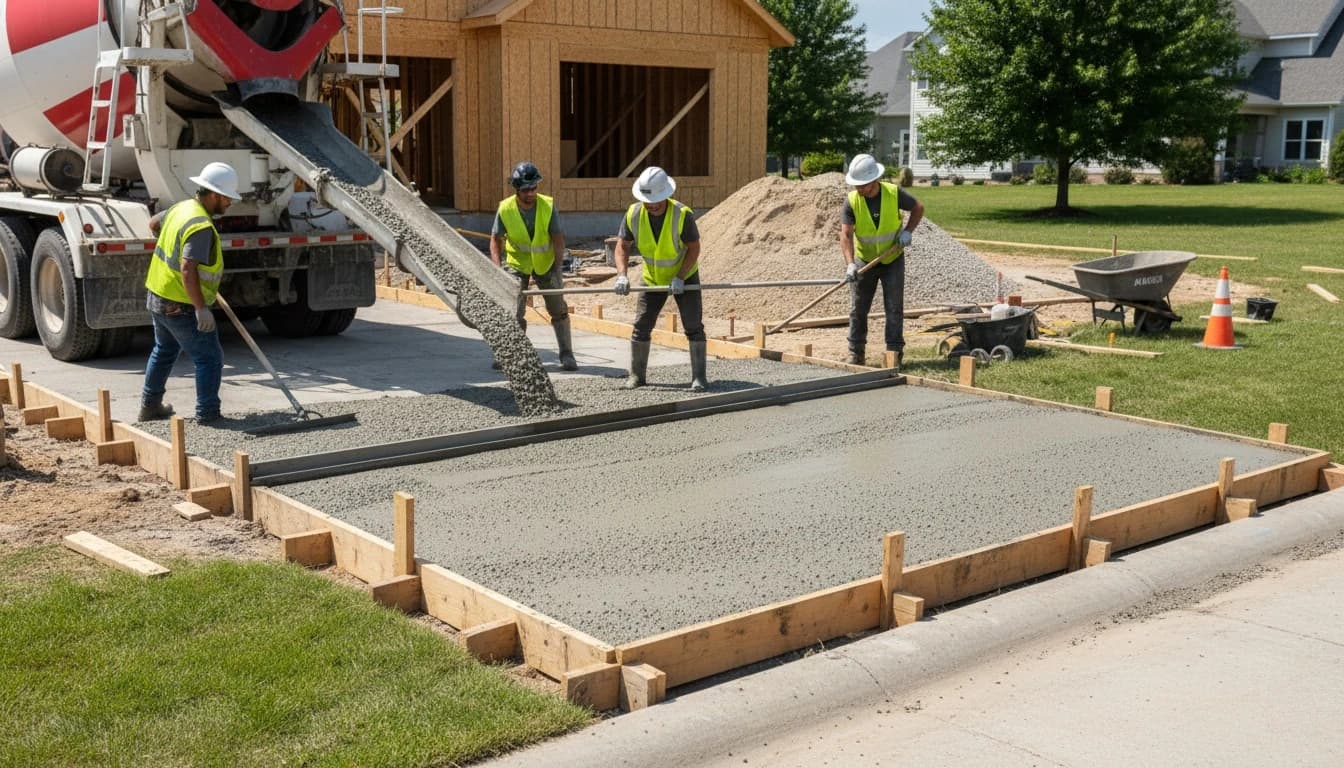
How to Calculate Concrete: The Ultimate 2026 Material Guide
Master concrete volumetric math for slabs, footings, and stairs in 2026. Learn the 10% waste rule and how to choose between ready-mix and bags.