

Lumber Calculator
Calculate the board feet and total cost of lumber for your construction project. Ideal for framing, decking, and woodworking projects. Professional-grade accuracy for your home projects.
Share This Professional Calculator
Found this helpful? Share it with your network to assist them with their home improvement projects.
Recommended Professional Tools
Precision-engineered calculators to streamline your most critical home project decisions.
Expert Guide to Lumber
Step-by-Step Instructions
- 1
Step 1: Define Piece Dimensions
Enter the thickness, width, and length of the individual boards you need. Note that "nominal" dimensions (like a 2x4) are actually larger than the "actual" dimensions (1.5x3.5), which our calculator accounts for.
- 2
Step 2: Enter Quantity
Input the number of identical pieces required for this part of your project.
- 3
Step 3: Specify Price per Unit
Enter the current price per board foot or per piece from your local lumber yard.
- 4
Step 4: Add Waste Percentage
Include a 10-15% waste factor. This accounts for boards that are twisted, bowed, or have large knots that make them unusable for your specific application.
- 5
Step 5: Review Total Board Feet
The tool provides the total volume and the estimated cost for your material order.
Pro Tips & Analysis
The key to buying lumber is understanding Nominal vs. Actual Dimensions. When you buy a 2x4 at the store, it actually measures 1.5 inches by 3.5 inches. This discrepancy occurs because the wood is "dressed" or planed smooth after it is cut at the mill. For board foot calculations, the nominal dimensions are used. A "Board Foot" is defined as a volume of wood equivalent to a board 12 inches wide, 12 inches long, and 1 inch thick (144 cubic inches). If you are buying hardwoods for furniture, you may see thickness expressed in "Quarters"—where 4/4 is 1 inch thick, 8/4 is 2 inches thick, and so on. Our calculator handles these conversions automatically to ensure your "material takeoff" matches the reality of the lumber yard.
Another vital consideration is Lumber Grading. Construction lumber is typically graded as #2 or better, which allows for some knots and imperfections that don't affect structural integrity. For visible projects like decking or furniture, you might look for "Select" or "Clear" grades, which are significantly more expensive. When using our calculator, ensure you have the correct price per foot for the specific grade you need. Additionally, focus on Moisture Content. Wood is a natural material that shrinks and expands with humidity. For indoor projects, "Kiln Dried" (KD) lumber is essential to prevent warping after installation. For outdoor projects like decks, "Pressure Treated" (PT) or naturally rot-resistant woods like Cedar or Redwood are required. Our tool helps you get the quantities right, but selecting the correct species and grade for your environment is what ensures a professional, long-lasting result.
Scientific Calculation Methodology
Board feet is calculated as (Thickness x Width x Length) / 12, using nominal dimensions in inches and feet.
Practical Example:
One 2x4 that is 8 feet long: (2 x 4 x 8) / 12 = 5.33 Board Feet.
Achieving Precision Results
Always hand-pick your lumber at the store; "sight" down the board to check for crowns, twists, and bows.
Store your lumber flat and in a dry area for 48-72 hours before use to allow it to "acclimatize" to your home's humidity.
Use "Common" grade for framing and "Select" or "Finish" grade for trim and cabinetry to balance your budget.
Apply a "End-Grain Sealer" to the cut ends of expensive hardwoods to prevent checking and cracking as the wood dries.
Always add a 15% waste factor for hardwoods, as you will often need to "rip" boards to width or cut around knots.
Technical Fast Facts
- ✓A "Board Foot" is a volume measurement (12" x 12" x 1").
- ✓Nominal 2x4s actually measure 1.5" x 3.5" after planing.
- ✓Hardwood lumber is often sold in "Quarters" (e.g., 4/4 = 1 inch thick).
- ✓Kiln-dried lumber prevents warping after installation.
- ✓Pressure-treated wood must be used for all outdoor framing.
Expert Q&A
Explore Related Tools
Precision tools to complement your current calculation.
Driveway Materials
Estimate gravel, concrete, or asphalt needed for a new driveway. Includes base material and top layer calculations.
Concrete
Calculate concrete volume in cubic yards and bags. Our concrete slab calculator makes it easy to estimate materials for your patio or footing.
Gravel
Calculate the amount of gravel or crushed stone you need. Get project estimates in cubic yards and tons for any landscape or driveway project.
Roofing Materials
Estimate your roofing materials needs. Calculate the number of shingle bundles and roofing squares required based on your roof's area and pitch.
In-Depth Guides
Expert insights and advice to help you make informed home decisions.

Foundation Footing Depth for Cold Climates: 2026 IRC Rules
A deep dive into 2026 IRC requirements for foundation footings in cold climates. Learn about frost line maps, thickened slab edges, and protecting foundations from frost heave.
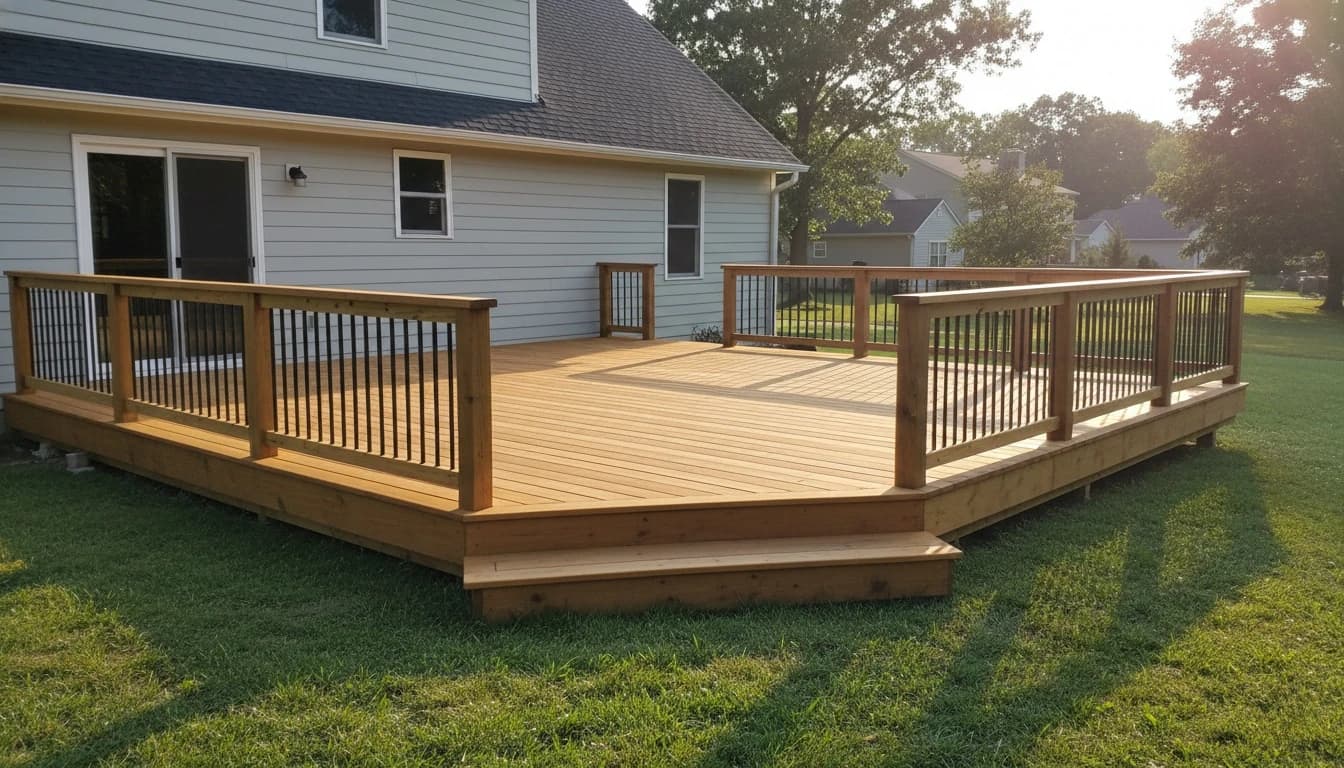
Deck Footing Depth 101: 2026 Guide to Digging Below the Frost Line
Learn the fundamental rule for deck construction in 2026: digging footings below the local frost line. We cover 2026 IRC requirements.
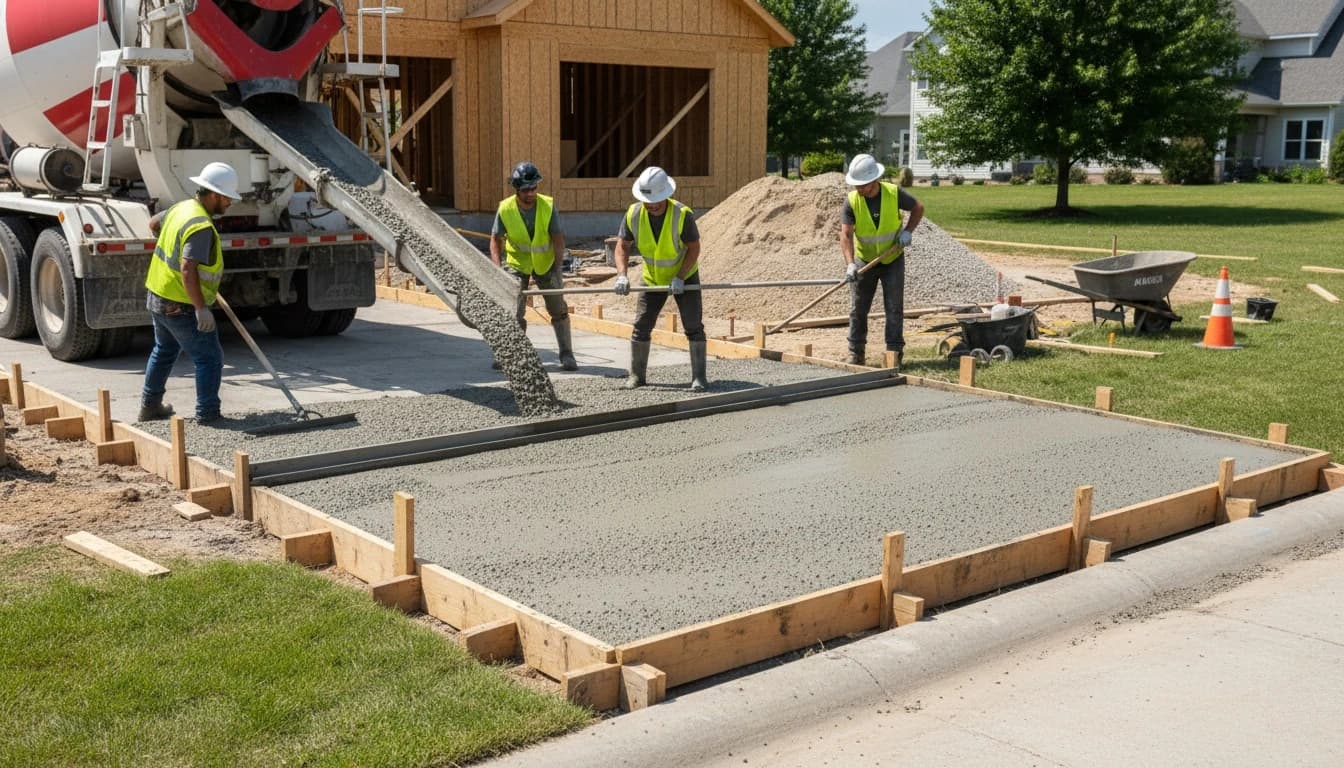
How to Calculate Concrete: The Ultimate 2026 Material Guide
Master concrete volumetric math for slabs, footings, and stairs in 2026. Learn the 10% waste rule and how to choose between ready-mix and bags.