

Decking Materials Calculator
Quickly estimate your deck materials. This tool calculates the number of decking boards and framing components for a simple rectangular deck. Professional-grade accuracy for your home projects.
Share This Professional Calculator
Found this helpful? Share it with your network to assist them with their home improvement projects.
About the Decking Materials Calculator
Quickly estimate your deck materials. This tool calculates the number of decking boards and framing components for a simple rectangular deck. This professional-grade tool is built for homeowners, contractors, and real estate professionals who need fast, reliable estimates without the complexity of manual spreadsheet calculations. Every formula used in this calculator is based on current industry standards, regional cost data, and actuarial benchmarks updated for 2025–2026.
Whether you are planning a new construction project, comparing renovation bids, or simply trying to budget for an upcoming home improvement, this calculator provides a transparent, step-by-step breakdown of costs and quantities. Unlike generic online estimators, HomeCalc Pro accounts for material waste factors, local labour cost differentials, and project-specific variables to give you a result you can actually use.
All results generated by this tool are estimates intended for planning and budgeting purposes. For final project quotes, we recommend consulting a licensed contractor or certified professional in your area. Explore our full library of 100+ professional calculators across HVAC, roofing, flooring, landscaping, mortgage finance, and construction materials to plan every aspect of your home project with confidence.
Expert Guide to Decking Materials
Step-by-Step Instructions
- 1
Step 1: Enter Deck Dimensions
Input the length (parallel to the house) and the width (extending out from the house) in feet.
- 2
Step 2: Choose Deck Board Size
Select between standard 6-inch boards (5.5" actual) or 4-inch boards (3.5" actual).
- 3
Step 3: Define Joist Spacing
16 inches on-center (OC) is the standard for wood decking; 12 inches OC is often required for composite or diagonal layouts.
- 4
Step 4: Select Fastener Type
Choose between "Face Screws" (visible) or "Hidden Fasteners." This affects the number of screws and the spacing between boards.
- 5
Step 5: Review Material List
Get an itemized count of Deck Boards, Joists, Beams, Hangers, and Screws.
Pro Tips & Analysis
The most important structural element of a deck is the Joist Span. The size of your joists (e.g., 2x8 vs 2x10) determines how far the deck can "overhang" or "span" between beams without sagging or bouncing. Professionals use specialized "Span Tables" to ensure the deck is rock-solid. Our calculator provides a baseline stud count for 16-inch OC spacing, which is the industry standard for a firm feel. Another vital consideration is "Blocking." These are short pieces of lumber installed between the joists to prevent them from "rolling" or twisting over time. While often skipped by amateurs, proper blocking is what separates a professional-grade deck from one that feels "spongy" underfoot. Our tool helps you with the main material, but we recommend adding 10% to your framing lumber order for these essential supports.
When it comes to the surface, Gap Spacing is critical. Wood decking needs a 1/8-inch gap to allow for natural expansion and for water to drain. Composite decking often requires a larger 3/16-inch gap and has specific "End-to-End" spacing requirements to account for thermal expansion. Our calculator helps you get the board count right, but you must use the manufacturer-provided spacers or "Hidden Fastener" clips to ensure these gaps are consistent. Finally, remember the Ledger Flashing. The ledger board (the board that attaches the deck to your house) is the most common place for home rot. You must use a "Z-Flashing" metal strip to divert water away from the house sheathing. Our tool provides the linear footage for your ledger, but your attention to this single piece of metal is what protects your home's structural integrity for the next 30 years.
Scientific Calculation Methodology
Board count is (Deck Width / (Board Width + Gap)) x (Deck Length / Board Length).
Practical Example:
A 16-ft wide deck needs (16 / 0.468) = 35 boards that are 16 feet long.
Achieving Precision Results
Always install deck boards "Bark Side Up" (the rings curve downward) to prevent the boards from cupping and holding water.
Use "Hidden Fasteners" for a cleaner look and to prevent "mushrooming" around screw holes in composite decking.
Apply "Joist Tape" to the top of all framing to prevent moisture from sitting on the wood and causing rot.
Stagger your board joints so they don't all land on the same joist; this creates a stronger and more beautiful deck.
Double-check your "Joist Hangers"; use the specific nails designed for hangers, not standard roofing or framing nails.
Technical Fast Facts
- ✓Standard joist spacing for wood decks is 16 inches on-center.
- ✓Composite decking often requires 12-inch joist spacing for stability.
- ✓Hidden fasteners create a clean surface but require more labor.
- ✓Ledger board flashing is critical to prevent house rot.
- ✓Use specific joist hanger nails, never standard roofing nails.
Expert Q&A
Explore Related Tools
Precision tools to complement your current calculation.
Flooring
Calculate the square footage of flooring needed for your project. Works for tile, laminate, or hardwood, including a vital waste factor.
Siding
Estimate the total siding material needed for your home. Calculate the squares of vinyl, fiber cement, or wood siding for your project.
Wallpaper
Calculate the number of wallpaper rolls you need. Our estimator accounts for pattern repeat and waste, ensuring you buy the right amount.
Kitchen Remodel Estimator
Get a kitchen renovation cost estimate. Create a budget for your remodel based on kitchen size and quality of cabinets, countertops, and appliances.
In-Depth Guides
Expert insights and advice to help you make informed home decisions.

Paint Calculator Truth: Why 'Coverage' on the Can is Usually Wrong in 2026
Discover why the square footage on the paint can is a best-case scenario and how to calculate your real-world needs in 2026.
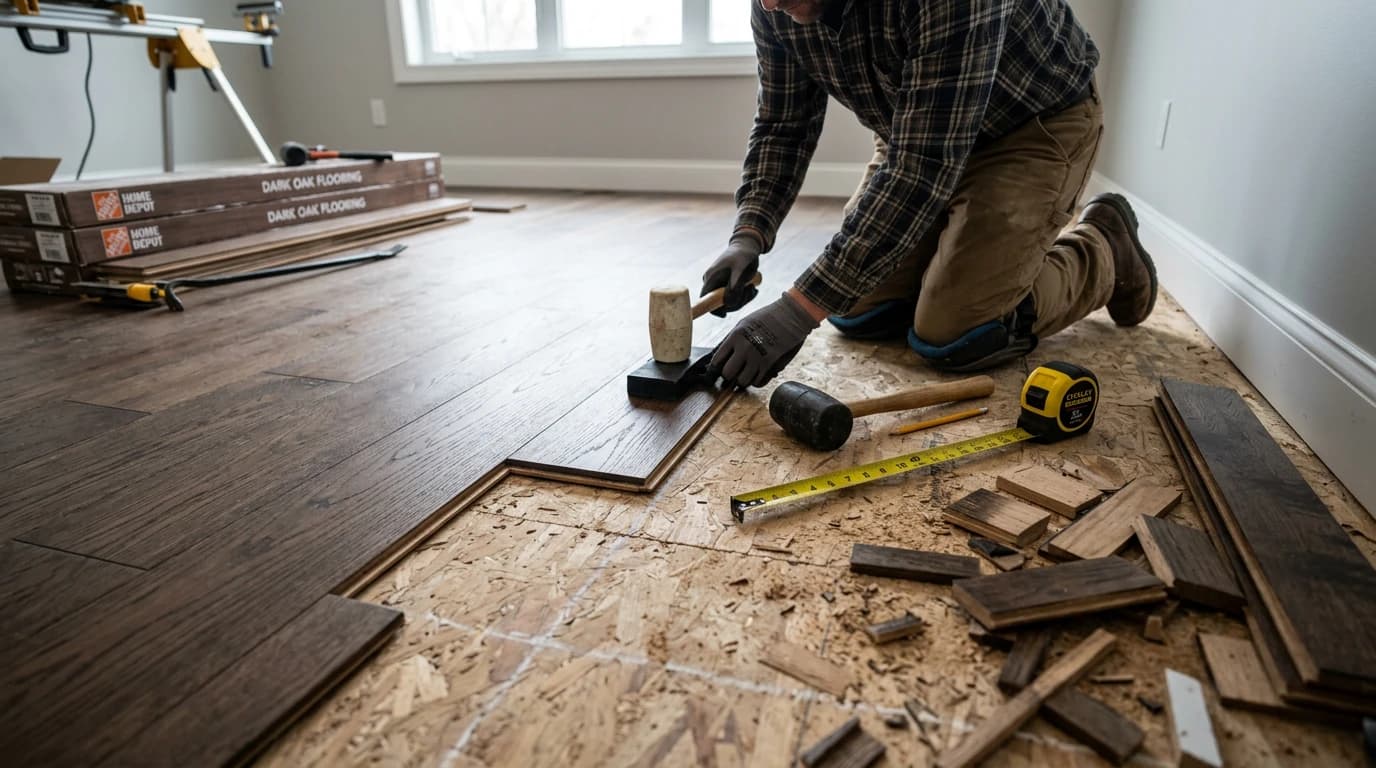
Flooring Waste Factor: Why You Need 10-15% Extra in 2026
Don't run out of flooring in 2026. Learn why you need 10-15% extra for waste, and why diagonal patterns or tile can require 20% or more.
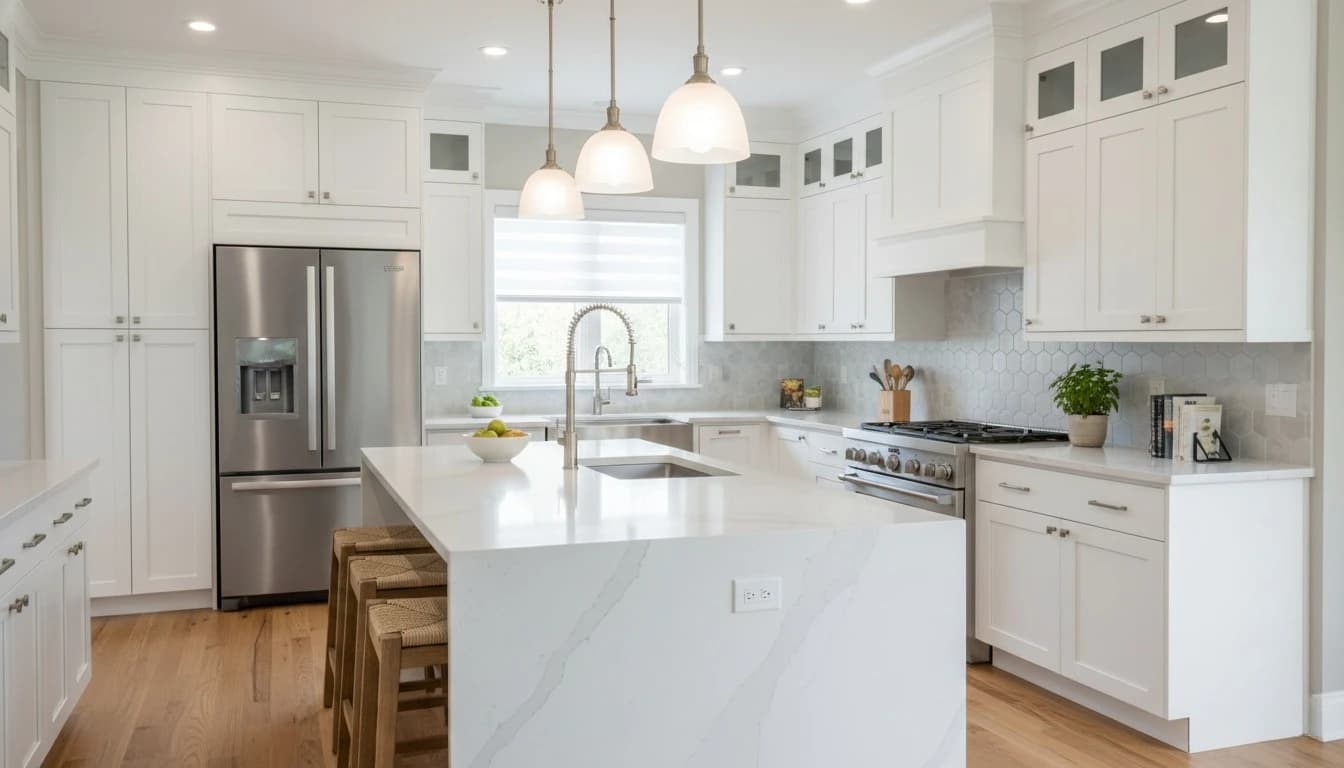
Kitchen Remodel Cost Guide 2026: Budgeting for Your Dream Space
The complete breakdown of kitchen renovation costs in 2026. From custom cabinetry to smart appliances, know where every dollar goes.