Furnace Cost Estimator
A furnace cost estimator is a professional financial tool that calculates the total installed price of a new gas, electric, or oil heating system, factoring in home size, fuel type, and efficiency (AFUE).
How to use this calculator
Get a rough estimate for a new furnace installation. Cost depends heavily on home size, fuel type, efficiency rating (AFUE), climate, and local labor rates. This is for budget planning only.
Introduction to Furnace Cost Estimator
How to Use the Furnace Cost Estimator
- Step 1: Enter Home Living Area: Input the total square footage that the furnace will heat. This determines the BTU output required.
- Step 2: Choose Your Fuel Source: Select from Natural Gas (most common), Propane, Electric, or Oil.
- Step 3: Select Efficiency Level (AFUE): Choose 80% (standard) or 95-98% (condensing/high-efficiency).
- Step 4: Factor in Installation Type: Select "New Construction" or "Replacement." Replacements often require ductwork modifications or new venting.
- Step 5: Review Total Budget: Get an itemized estimate including the furnace unit, professional labor, and required permits.
Understanding Furnace Cost Estimator
The key to furnace value is the AFUE Rating (Annual Fuel Utilization Efficiency). An 80% AFUE rating means that for every dollar you spend on gas, 80 cents goes into heating your home and 20 cents is wasted up the chimney. A 96% AFUE unit only wastes 4 cents. If you live in a cold climate (like the Midwest or Northeast), the "Payback Period" for a 96% unit is often less than 5 years. Our calculator allows you to compare these tiers side-by-side. Another vital consideration is Variable-Speed Blowers. Unlike standard "all-on or all-off" motors, variable-speed blowers can adjust their speed to maintain a perfectly consistent temperature, which eliminates cold spots and is much quieter. This feature usually adds $500-$800 to the cost but significantly improves comfort.
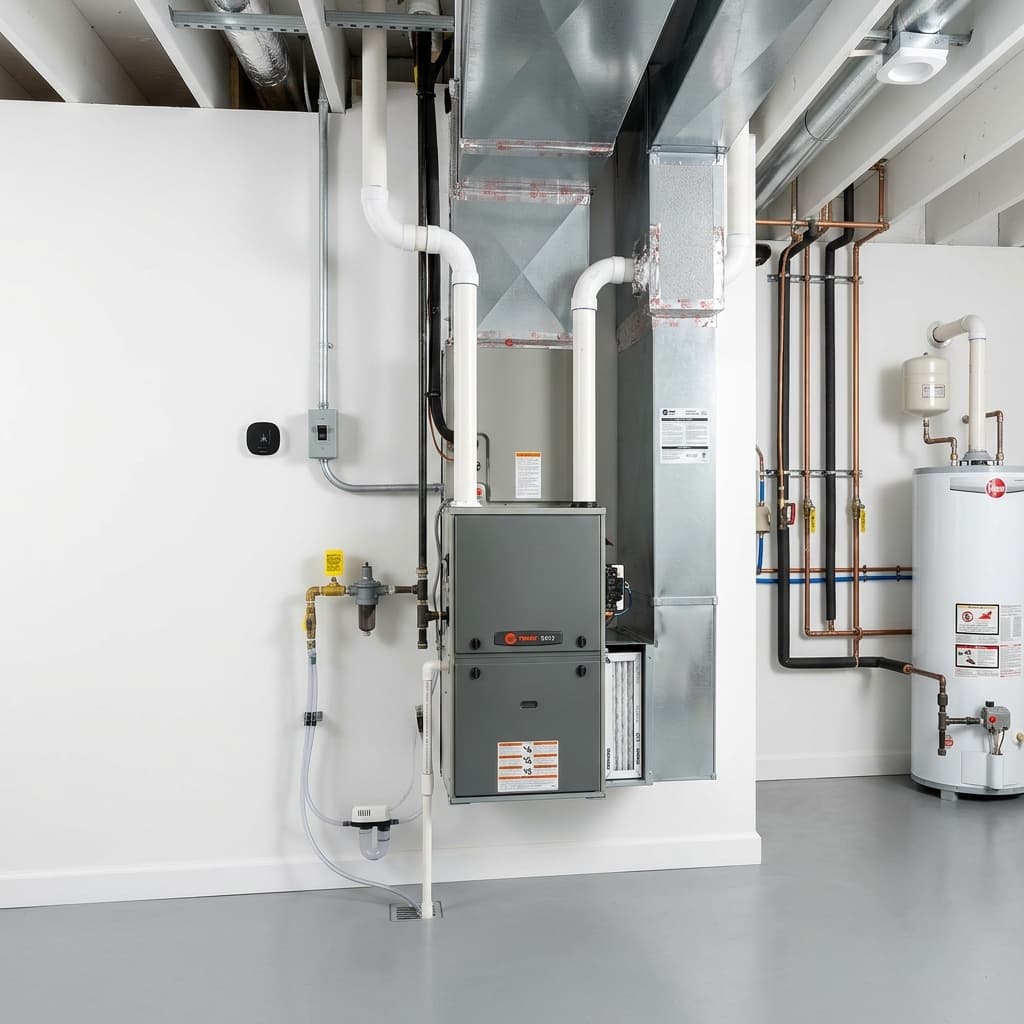
When replacing a furnace, don't ignore the Venting and Drainage. High-efficiency furnaces are "condensing" units—they extract so much heat from the exhaust that the exhaust gas turns into water. This means they require a PVC plastic vent through the side of the house rather than a metal chimney, and they need a drain line or a "condensate pump." If your home isn't currently set up for this, your installation labor will be at the higher end of our estimates. Our tool provides a "Venting Upgrade" field to account for these technical requirements. Finally, always ensure your contractor performs a Manual J Load Calculation. Oversizing a furnace is a common mistake that leads to "short-cycling," which wears out the components faster and reduces efficiency. Our tool provides a BTU estimate, but a professional on-site measurement is the only way to ensure a perfect fit.
Formula & Calculation Method
Estimated cost is based on BTU requirements (Area x 35-50) multiplied by a fuel-specific base rate.
Example Calculation:
A 2,000 sq ft home (80k BTU) with a 96% Gas furnace: $3,000 (unit) + $3,500 (labor) = approx $6,500.
Tips for Accurate Results
- 1Install a "Smart Thermostat" at the same time as your new furnace to maximize energy savings through scheduling.
- 2Check for local utility rebates; many gas companies offer $200-$600 for upgrading to a 95%+ AFUE furnace.
- 3Replace your "Filter" every 90 days; a clogged filter is the #1 cause of furnace breakdowns.
- 4If your furnace is over 15 years old and needs a repair costing more than $800, it is usually better to replace the entire unit.
- 5Consider adding a "Whole-Home Humidifier" to the furnace; it makes the air feel warmer at lower temperatures in the winter.
Key Facts About Furnace Cost Estimator
- •AFUE (Annual Fuel Utilization Efficiency) measures how much fuel becomes actual heat.
- •High-efficiency furnaces (90%+) require PVC venting rather than metal chimneys.
- •A 2-stage furnace provides more consistent comfort than a standard 1-stage unit.
- •Labor typically accounts for 40-60% of the total furnace replacement cost.
- •Permits and inspections are mandatory for safe gas furnace installations.
Frequently Asked Questions
How much does a new furnace cost in 2025?
A standard gas furnace replacement typically costs between $4,500 and $8,000. High-efficiency systems with multi-stage heating can range from $8,000 to $14,000.
What is AFUE?
AFUE stands for Annual Fuel Utilization Efficiency. It represents the percentage of fuel that is converted into usable heat over a typical year.
How long does a furnace installation take?
A standard replacement can usually be completed in one day (8-10 hours) by a two-person professional crew.
Related Calculators
HVAC Load Calculator
Free Manual J load calculation. Get accurate BTU requirements for your home to choose the right size furnace and AC system. Avoid costly mistakes.
AC Size (BTU) Calculator
Find the perfect air conditioner size. Our BTU calculator helps you determine the right cooling capacity for any room based on size and conditions.
Duct Size Calculator
A free HVAC duct sizing calculator to determine the proper duct diameter for your system based on airflow (CFM). Ensure optimal performance.
SEER Savings Calculator
Estimate your annual savings by upgrading to a high-efficiency AC unit. See your potential cost reduction and payback period with a new SEER2 system.
Related Articles
What is AFUE? Understanding Furnace Efficiency Ratings
A complete guide to AFUE (Annual Fuel Utilization Efficiency). Learn what the percentage means, the difference between 80% and 95% furnaces, and how to choose the right one.
Ductwork Design (Manual D): The Unseen Key to HVAC Performance
Your HVAC system is only as good as its ductwork. Learn what ACCA Manual D is, why it's critical for airflow, and how improper ducts waste thousands.
Heat Pump vs. Gas Furnace: Which is Right for Your Climate Zone?
An analysis of heat pumps and gas furnaces. Learn the pros, cons, and operating costs of each to determine the best heating system for your home's climate.