

HVAC Load Calculator
Free Manual J load calculation. Get accurate BTU requirements for your home to choose the right size furnace and AC system. Avoid costly mistakes. Professional-grade accuracy for your home projects.
How to Use This Calculator
A "Manual J" load calculation is the right way to determine the heating and cooling needs for your home. An oversized system wastes energy, while an undersized one won't keep you comfortable. This simplified tool provides a reliable estimate for residential homes based on the most important factors.
Share This Professional Calculator
Found this helpful? Share it with your network to assist them with their home improvement projects.
The Science of Sizing: Why Manual J is Non-Negotiable
In the HVAC industry, there is a saying: "An oversized system is a failing system." While it might seem intuitive that a larger air conditioner would cool your home faster and better, the opposite is true. Our HVAC load calculator is designed to provide you with the baseline data needed to ensure your equipment is perfectly matched to your home's unique thermal profile.
Sensible vs. Latent Heat Loads
A critical part of any load calculation is distinguishing between sensible heat and latent heat. Sensible heat is the "dry" heat that you see on a standard thermometer—it's the thermal energy of the air itself. Latent heat, however, is the energy stored in the moisture (humidity) of the air. In humid climates, the air conditioner's job is twofold: it must lower the temperature (remove sensible heat) and remove water vapor (remove latent heat). If a system is oversized and short-cycles, it may satisfy the thermostat's sensible heat setting in just 10 minutes, but it won't run long enough to effectively dehumidify the space, leaving you feeling "cold and clammy."
The Impact of Home Orientation
Did you know that two identical houses on the same street can have vastly different HVAC requirements? The primary reason is orientation. A house with a large wall of windows facing West will experience massive solar heat gain during the hottest part of the afternoon. In contrast, the same house oriented toward the North will stay much cooler. A professional Manual J calculation accounts for this by calculating the "Solar Heat Gain" for every window based on the direction it faces and the specific glass type (U-factor and SHGC).
Air Infiltration: The Invisible Load
Even the best-insulated home will struggle if it is "leaky." Air infiltration refers to the unconditioned outside air that enters your home through gaps around windows, doors, electrical outlets, and plumbing penetrations. In older, drafty homes, this infiltration can account for up to 30% of the total heating and cooling load. Professionals often use a "Blower Door Test" to measure this leakage exactly. By air sealing your home—using caulk, weatherstripping, and spray foam—you can permanently reduce your home's load, often allowing you to install a smaller, quieter, and less expensive HVAC system.
The Role of Ductwork in System Performance
You can have the most perfectly sized, high-efficiency heat pump in the world, but if your ductwork is undersized or leaky, the system will fail. A load calculation tells you how much air each room needs (measured in CFM), but a "Manual D" calculation is required to size the ducts correctly to deliver that air. Leaky ducts in an unconditioned attic can waste 20% to 30% of your system's capacity before it even reaches your living space. When replacing your system, always insist that your contractor inspect and seal your ductwork to ensure you are getting the full benefit of your new equipment.
Related HVAC & Energy Calculators
Expert Guide to HVAC Load
Step-by-Step Instructions
- 1
Step 1: Measure Total Conditioned Living Area
Accurately input the total square footage of all finished, conditioned spaces in your home. Conditioned spaces are those that will be directly served by the supply and return vents. Do not include unconditioned areas such as garages, open porches, or unfinished attics, as including them will result in an oversized system recommendation. If you plan to finish a basement or convert a garage as part of this project, include those dimensions in your total.
- 2
Step 2: Identify Your Regional Climate Zone
Select your U.S. Climate Zone based on the Department of Energy (DOE) and IECC maps. These zones are defined by "design temperatures"—the 99% statistical extreme high and low temperatures for your specific geographic location. This ensures your HVAC system has sufficient capacity to handle the absolute peak of summer heat and the depths of winter cold without being wastefully over-designed for everyday weather.
- 3
Step 3: Evaluate Wall and Attic Insulation Quality
Specify the insulation R-value of your home's thermal envelope. Be realistic: older homes (pre-1990) often have "Poor" or "Average" insulation (R-11 to R-19 in walls), while modern high-performance homes meet "Good" or "Code-Plus" standards (R-21+ walls, R-49+ attics). Improving your insulation before sizing your HVAC can often allow you to purchase a smaller, less expensive unit, providing a massive return on investment.
- 4
Step 4: Audit Windows and Exterior Glass Doors
Input the total surface area of all exterior windows and glass doors, and specify the pane type (Single, Double, or Triple-pane). Windows represent the primary thermal weak point in any building envelope. Factors such as Solar Heat Gain Coefficient (SHGC) and framing material (Vinyl vs. Metal) have a significant impact on the cooling load. Our calculator uses standard weighted averages for these components to provide a high-fidelity BTU estimate.
- 5
Step 5: Select Building Orientation and Shading
Indicate which direction the front of your home faces and the level of external shading from trees or neighboring structures. Solar heat gain is most intense on the South and West-facing walls of a house. A home with significant West-facing glass and no shading will require substantially more cooling capacity than an identical home oriented toward the North or protected by a dense tree canopy.
- 6
Step 6: Account for Internal Heat Gains and Air Infiltration
Input the number of regular occupants and indicate the general "tightness" of your building shell. Each human in a space generates approximately 250 to 400 BTUs of heat per hour. Additionally, appliances, home servers, and lighting all generate internal heat that must be countered by the air conditioner. Furthermore, air infiltration (leaky windows, doors, and electrical penetrations) forces your system to condition "new" unconditioned air constantly, adding a significant latent (moisture) and sensible (temperature) load to the final calculation. A "drafty" home can require 30% more capacity than a well-sealed one.
Pro Tips & Analysis
A professional-grade load calculation, strictly governed by the ACCA's Manual J standard, is a comprehensive engineering evaluation of a building's unique thermal properties. It is the only scientifically valid method for HVAC sizing, moving far beyond the dangerous and outdated "rules of thumb"—such as the common but deeply flawed "1 ton per 500 square feet" rule. In modern, well-insulated homes built to 2021 or 2026 IECC standards, following that old rule can result in a system that is 50% to 100% larger than actually required by the physics of the house. The consequences of such extreme over-sizing are not just financial; they are environmental and structural. An oversized system reaches the thermostat setpoint so quickly that it never completes a long enough cycle to effectively remove moisture from the air. This results in high indoor relative humidity, which creates a "cold and clammy" environment, encourages the growth of toxic mold and dust mites, and causes massive mechanical stress on the compressor due to frequent starting and stopping.
The concept of the Thermal Envelope is central to this calculation. The envelope is the continuous physical barrier that separates your conditioned indoor air from the unconditioned outdoor environment. Every square inch of this barrier—including the walls, roof, floor, windows, and doors—has a specific rate of heat transfer, measured as its U-factor (the inverse of R-value). A load calculation is essentially a massive summation: it calculates the heat loss (in winter) and heat gain (in summer) through every single component of the envelope simultaneously. It also factors in "latent load," which is the energy required to remove water vapor generated by cooking, showering, and the natural respiration of the occupants. By precisely matching the HVAC equipment's sensible and latent capacity to these calculated loads, you ensure a system that operates in long, efficient, and quiet cycles. These steady cycles are the only way to achieve perfectly even temperatures across every room while ensuring the air is properly filtered and dehumidified.
Furthermore, understanding Design Temperatures is vital for homeowner peace of mind. HVAC systems are not engineered for the record-breaking hottest or coldest day in history; they are designed for the temperatures that occur 99% of the time in your specific zip code. This engineering safety margin prevents you from overpaying thousands of dollars for "emergency" capacity that you will only truly need for a few hours every twenty years. During those rare record-breaking days, your system is designed to "lose ground" slightly (perhaps maintaining 74°F when it is 105°F outside), which is a normal and intended part of high-performance HVAC design. Our calculator utilizes these regional design standards to provide you with a sizing recommendation that balances extreme comfort with daily operational efficiency.
Scientific Calculation Methodology
The underlying physics of a load calculation follows the principle of heat transfer through the building envelope, calculated as the product of the heat transfer coefficient (U-factor), surface area (A), and the temperature difference (ΔT) between inside and outside.
Practical Example:
If a 100 sq ft wall (A) has a U-factor of 0.05 (roughly R-20 insulation) and the temperature difference between inside and outside is 40°F (ΔT), the heat loss through that wall is 200 BTUs per hour (0.05 × 100 × 40). A full calculation sums this for every surface and adds air infiltration (CFM_inf) and internal moisture gains.
Common HVAC Sizing by Square Footage
| Home Size (sq ft) | Estimated BTUs | Capacity (Tons) |
|---|---|---|
| 1,000 - 1,200 | 21,000 - 24,000 | 1.5 - 2.0 Tons |
| 1,500 - 1,800 | 30,000 - 36,000 | 2.5 - 3.0 Tons |
| 2,000 - 2,500 | 42,000 - 48,000 | 3.5 - 4.0 Tons |
| 3,000+ | 60,000+ | 5.0+ Tons |
Achieving Precision Results
Be extremely honest about your insulation levels; overestimating insulation quality leads to undersized systems that won't keep up in winter, while underestimating leads to expensive over-sizing. Use a ruler to check the actual depth of your attic insulation.
Measure every window accurately and note the direction it faces; windows on the South and West sides of a house contribute far more to the cooling load than those on the North. Solar heat gain is a major driver of cooling costs.
Prioritize air sealing (caulking and weatherstripping) before performing a load calculation, as it can reduce your required capacity by up to 20% and is the most cost-effective upgrade you can make for overall home efficiency.
Consider adding blown-in attic insulation to reach R-49 or higher before replacing your HVAC system; it is often cheaper than buying a larger air conditioner and provides a much faster return on investment (ROI).
Always consult a certified professional for a full Manual J before a final equipment purchase, especially if your home has unique architectural features like high vaulted ceilings, large skylights, or extensive glass walls.
Check if your local utility provider offers rebates for professional load calculations, home energy audits, or for installing high-efficiency systems that meet specific sizing criteria. Some rebates can cover up to $1,500 of the project cost.
If your results fall between standard equipment sizes (e.g., 2.7 tons), modern variable-speed inverter systems are the best choice as they can precisely modulate their output to meet the actual load of the home at any given moment.
Don't forget to account for internal heat gains from large appliances, home servers, or frequent large gatherings, as these can significantly impact the required cooling capacity needed for social spaces.
Ensure your ductwork is inspected for leaks and sized correctly for the new system; even the most perfectly sized unit will fail if the ducts are leaky, uninsulated, or too small to move the required airflow.
Always request a copy of the contractor's Manual J report. A reputable contractor will have no problem sharing this 10-20 page engineering document with you to justify their equipment choice.
Avoid contractors who use "square footage per ton" as their only sizing method. This is a red flag that indicates they are taking shortcuts that will lead to comfort and humidity problems later.
If you have recently replaced your windows or added insulation, your home's heat load has changed. Never use the size of your "old system" as a guide for the new one.
Technical Fast Facts
- ✓Exactly 12,000 BTUs per hour is equivalent to 1 Ton of cooling capacity. A 3-ton unit therefore provides 36,000 BTUs.
- ✓Sizing an air conditioner solely on square footage is an outdated and dangerous practice that leads to poor indoor air quality.
- ✓Correct equipment sizing is essential for effective dehumidification; a system must run for at least 15-20 minutes to remove moisture.
- ✓Improving your home's insulation and air sealing can often allow you to install a smaller, less expensive HVAC system with a higher ROI.
- ✓The average US home has enough cumulative air leaks to equal leaving a standard window wide open year-round.
- ✓Modern high-performance windows with Low-E coatings can block up to 70% of solar heat gain compared to clear single-pane glass.
- ✓Variable-speed "Inverter" HVAC systems can modulate their BTU output to match the real-time load of the home precisely.
- ✓An HVAC system that is just 20% oversized can increase your monthly energy bills by 10% to 15% due to startup inefficiencies.
- ✓The "Design Temperature" for your area is the temperature that is exceeded only 1% of the time annually.
- ✓Latent heat load (moisture) can account for over 30% of the total cooling requirement in humid coastal climates.
Expert Q&A
Explore Related Tools
Precision tools to complement your current calculation.
AC Size (BTU)
Find the perfect air conditioner size. Our BTU calculator helps you determine the right cooling capacity for any room based on size and conditions.
Duct Size
A free HVAC duct sizing calculator to determine the proper duct diameter for your system based on airflow (CFM). Ensure optimal performance.
SEER Savings
Estimate your annual savings by upgrading to a high-efficiency AC unit. See your potential cost reduction and payback period with a new SEER2 system.
Furnace Cost Estimator
Planning a furnace replacement? Get an estimated cost for a new gas, electric, or oil furnace installation based on your home size and climate.
Heat Pump Cost Estimator
Estimate the total installed cost of a new heat pump. Compare prices based on unit size and efficiency (SEER2) to budget for your project.
In-Depth Guides
Expert insights and advice to help you make informed home decisions.
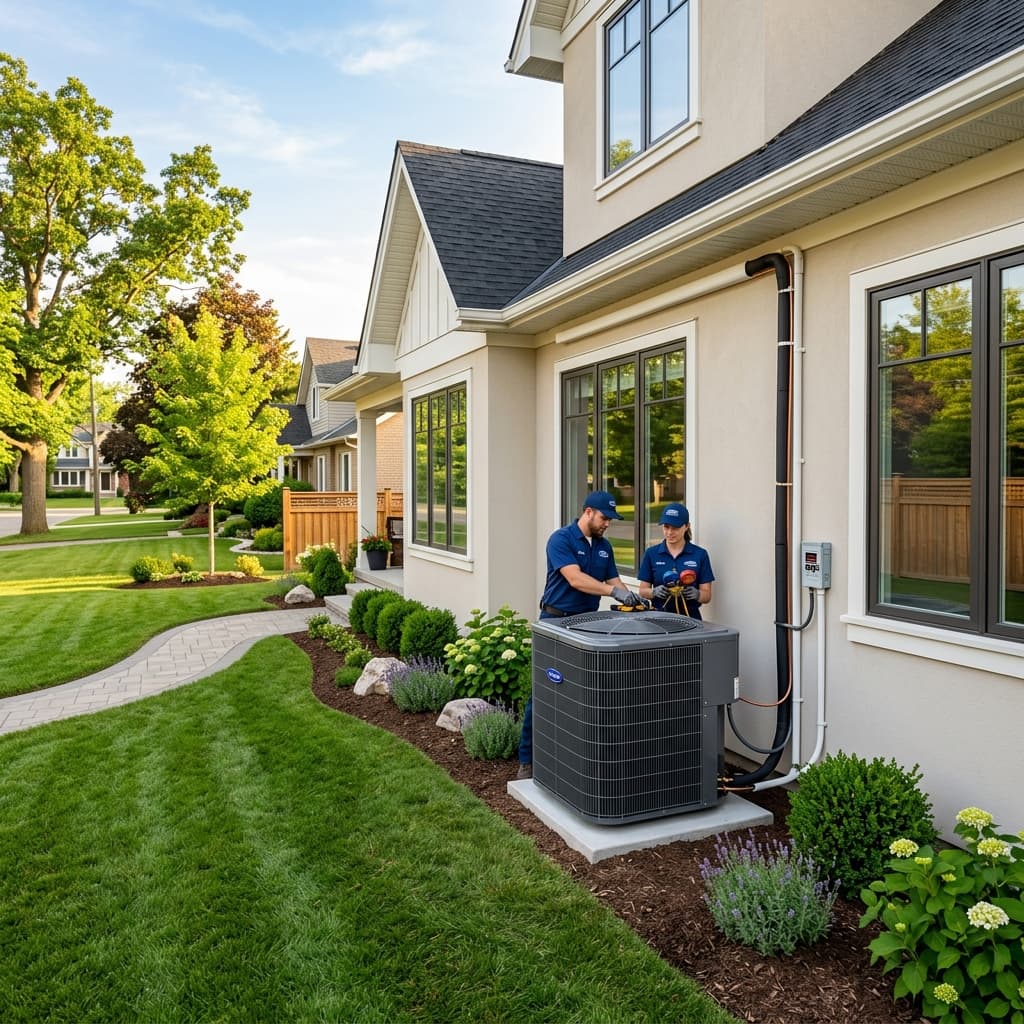
HVAC Sizing Guide 2026: Stop Guessing, Start Calculating
The definitive guide to sizing your air conditioner and furnace in 2026. Learn why the '500 sq ft per ton' rule is obsolete and how Manual J calculations ensure perfect sizing.
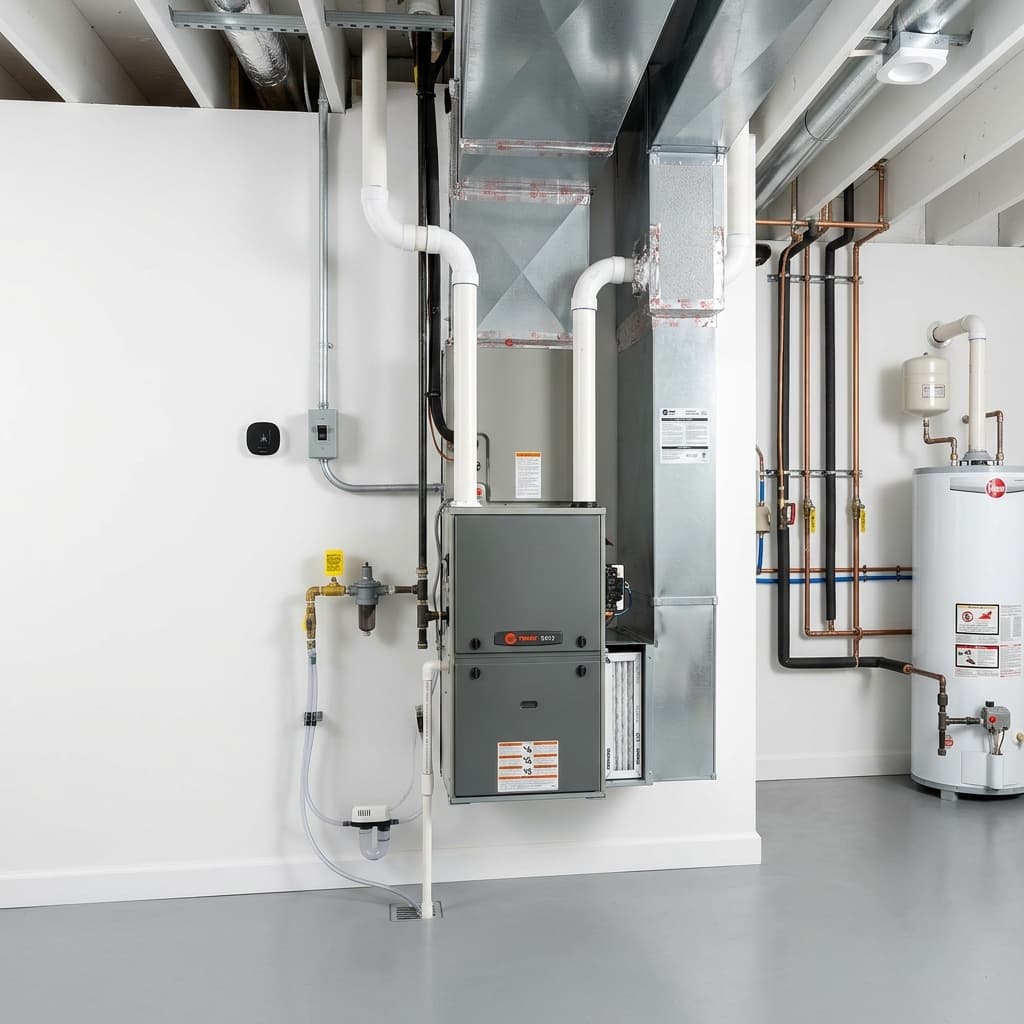
What is AFUE? Understanding Furnace Efficiency Ratings
A complete guide to AFUE (Annual Fuel Utilization Efficiency). Learn what the percentage means, the difference between 80% and 95% furnaces, and how to choose the right one in 2026.
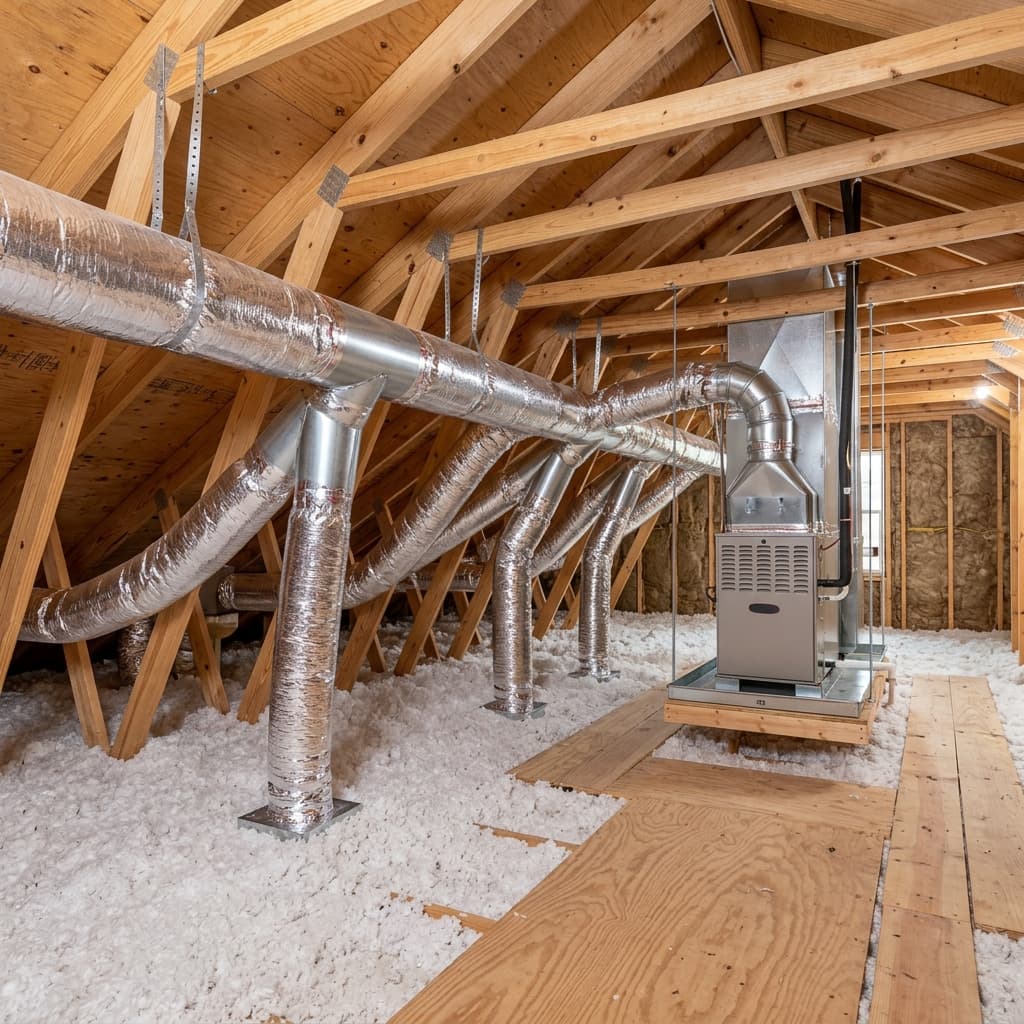
Ductwork Design (Manual D): The Unseen Key to HVAC Performance
Your HVAC system is only as good as its ductwork. Learn what ACCA Manual D is, why it's critical for airflow, and how improper ducts waste thousands in 2026.