

Kitchen Remodel Estimator
Get a kitchen renovation cost estimate. Create a budget for your remodel based on kitchen size and quality of cabinets, countertops, and appliances. Professional-grade accuracy for your home projects.
How to use this calculator
Budget for your dream kitchen. Select your kitchen's size and the quality level for major components to get a cost estimate. This is for budget planning only and is not a formal quote. Check our Layout Guide to get started.
Share This Professional Calculator
Found this helpful? Share it with your network to assist them with their home improvement projects.
About the Kitchen Remodel Estimator
Get a kitchen renovation cost estimate. Create a budget for your remodel based on kitchen size and quality of cabinets, countertops, and appliances. This professional-grade tool is built for homeowners, contractors, and real estate professionals who need fast, reliable estimates without the complexity of manual spreadsheet calculations. Every formula used in this calculator is based on current industry standards, regional cost data, and actuarial benchmarks updated for 2025–2026.
Whether you are planning a new construction project, comparing renovation bids, or simply trying to budget for an upcoming home improvement, this calculator provides a transparent, step-by-step breakdown of costs and quantities. Unlike generic online estimators, HomeCalc Pro accounts for material waste factors, local labour cost differentials, and project-specific variables to give you a result you can actually use.
All results generated by this tool are estimates intended for planning and budgeting purposes. For final project quotes, we recommend consulting a licensed contractor or certified professional in your area. Explore our full library of 100+ professional calculators across HVAC, roofing, flooring, landscaping, mortgage finance, and construction materials to plan every aspect of your home project with confidence.
Expert Guide to Kitchen Remodel Estimator
Step-by-Step Instructions
- 1
Step 1: Define Your Kitchen Size
Select your kitchen type: Small (under 70 sq ft), Medium (100-150 sq ft), or Large (over 200 sq ft).
- 2
Step 2: Choose Your Project Scope
Choose between a "Cosmetic Refresh" (no layout changes), a "Partial Remodel" (new cabinets/tops), or a "Full Gut Renovation."
- 3
Step 3: Select Material Quality
Pick your tier: Budget (stock items), Mid-Range (semi-custom), or High-End (fully custom, professional appliances).
- 4
Step 4: Account for Labor
Our tool defaults to professional installation, but you can adjust for DIY components to see your potential savings.
- 5
Step 5: Review the Budget Breakdown
Get an itemized estimate for Cabinets, Countertops, Appliances, Flooring, and Labor, plus a recommended 15% contingency fund.
Pro Tips & Analysis
Successful kitchen budgeting requires understanding the Rule of Thirds. Generally, 1/3 of your budget will go to cabinetry and hardware, 1/3 to labor and installation, and the remaining 1/3 to countertops, appliances, flooring, and lighting. If you find yourself spending 50% of your budget on a professional-grade range, you will likely have to compromise on your cabinet quality to stay on track. Our calculator helps you maintain this balance. Another vital consideration is "Behind the Wall" Costs. In older homes, opening a wall often reveals outdated electrical wiring or plumbing that doesn't meet current codes. This is why we insist on a 15-20% "contingency fund" in our estimates; it's not a matter of *if* you will find a surprise, but *what* it will be.
When planning your remodel, focus on Workflow and Resale Value. The "Kitchen Work Triangle" (the distance between the sink, stove, and refrigerator) should be efficient and unobstructed. From a resale perspective, mid-range remodels often have a higher Return on Investment (ROI) than ultra-luxury ones. Using high-quality quartz countertops and well-built semi-custom cabinets is the "sweet spot" for most homeowners. Our tool allows you to swap material tiers to see how these choices impact your total. Finally, don't forget the "Temporary Kitchen" cost. A full remodel can take 4-8 weeks, during which you will likely be eating out more often. Factoring this into your lifestyle budget is just as important as the price of the backsplash tile.
Scientific Calculation Methodology
Estimated cost is based on square footage multiplied by a "quality tier" price-per-foot factor.
Practical Example:
A 150 sq ft mid-range remodel: $150/sq ft x 150 = $22,500 + $5,000 for mid-range appliances = $27,500.
Achieving Precision Results
Don't move the plumbing or gas lines unless absolutely necessary; this single decision can save you $5,000 or more.
Invest in "Drawers" instead of "Lower Cabinets" for much better accessibility and storage efficiency.
Choose "Neutral" colors for expensive items like cabinets and countertops, and add personality through easy-to-change paint and hardware.
Order your appliances *before* the cabinets are finalized to ensure the "rough-in" dimensions are perfect.
Visit local stone yards to pick your actual countertop slab; don't rely on a 2-inch sample.
Technical Fast Facts
- ✓Cabinets typically account for 30-40% of a kitchen remodel budget.
- ✓Moving gas or plumbing lines can add $5,000+ to the project cost.
- ✓The "Kitchen Work Triangle" is the key to an efficient layout.
- ✓Quartz countertops offer high durability and low maintenance.
- ✓Energy Star appliances can reduce long-term operating costs.
Expert Q&A
Explore Related Tools
Precision tools to complement your current calculation.
Flooring
Calculate the square footage of flooring needed for your project. Works for tile, laminate, or hardwood, including a vital waste factor.
Siding
Estimate the total siding material needed for your home. Calculate the squares of vinyl, fiber cement, or wood siding for your project.
Wallpaper
Calculate the number of wallpaper rolls you need. Our estimator accounts for pattern repeat and waste, ensuring you buy the right amount.
Tile
Calculate how many tiles you need for a floor, wall, or backsplash. Our calculator accounts for grout lines and waste to ensure accuracy.
In-Depth Guides
Expert insights and advice to help you make informed home decisions.

Paint Calculator Truth: Why 'Coverage' on the Can is Usually Wrong in 2026
Discover why the square footage on the paint can is a best-case scenario and how to calculate your real-world needs in 2026.
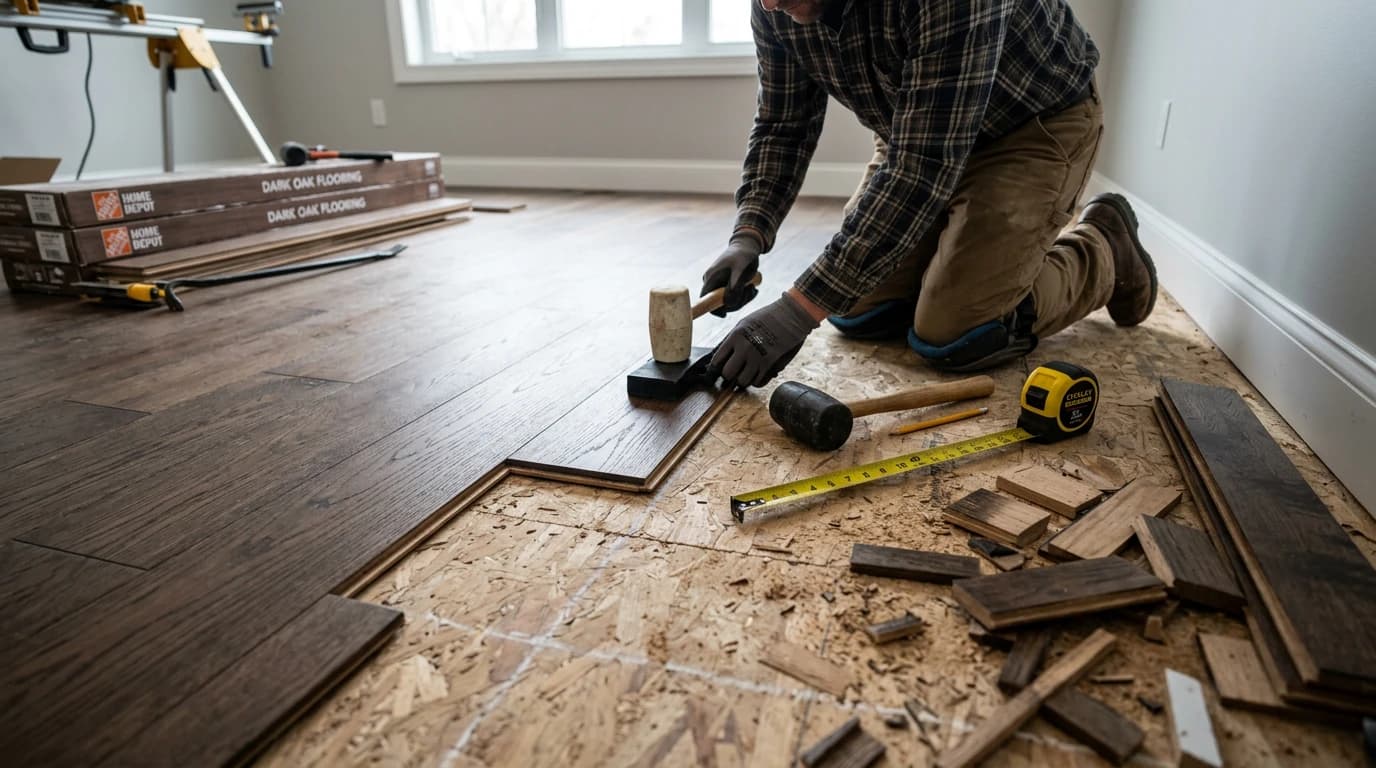
Flooring Waste Factor: Why You Need 10-15% Extra in 2026
Don't run out of flooring in 2026. Learn why you need 10-15% extra for waste, and why diagonal patterns or tile can require 20% or more.
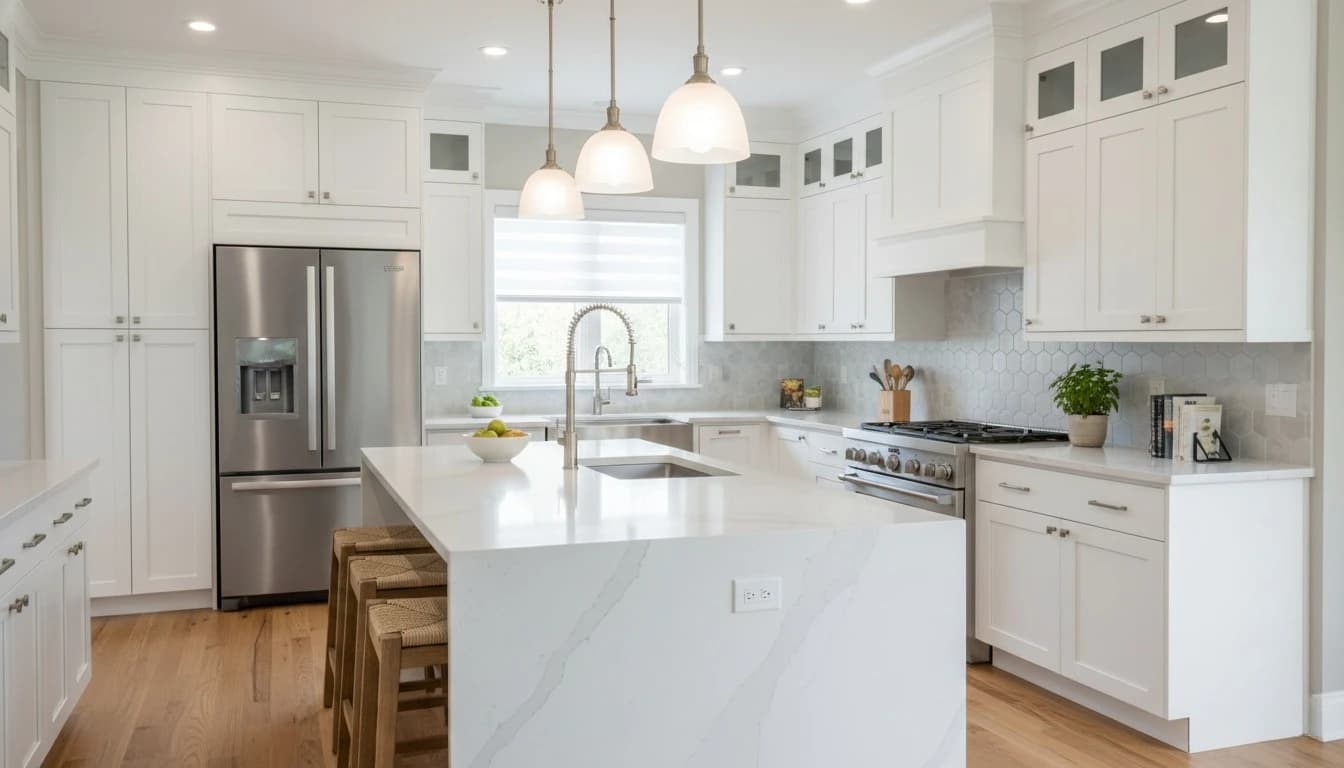
Kitchen Remodel Cost Guide 2026: Budgeting for Your Dream Space
The complete breakdown of kitchen renovation costs in 2026. From custom cabinetry to smart appliances, know where every dollar goes.