

Dehumidifier Size Calculator
Find the right dehumidifier size for your basement or room. Calculate the correct pint capacity based on room size and moisture level. Professional-grade accuracy for your home projects.
How to use this calculator
Find the right size dehumidifier to effectively remove moisture from your room or basement. Choose the condition that best describes your space. Learn more in our guide.
Share This Professional Calculator
Found this helpful? Share it with your network to assist them with their home improvement projects.
Expert Guide to Dehumidifier Size
Plan your project with precision using our 2026 standardized calculator.
Step-by-Step Instructions
- 1
Measure Total Area Square Footage
Input the total square footage of the floor space that needs dehumidification. For crawlspaces, measure the entire footprint of the home even if it is a dirt floor.
- 2
Identify the Current Dampness Level
Choose from "Moderately Damp" (musty smell only in humid weather) to "Extremely Wet" (standing water on the floor or water weeping from walls).
- 3
Specify Average Room Temperature
Note if the area is a cold basement (below 60°F). Cold air requires a dehumidifier with a specialized "defrost cycle" to prevent ice buildup on the cooling coils.
- 4
Select Your Preferred Drainage Method
Indicate if you will use the manual bucket, a gravity hose connected to a floor drain, or a built-in condensate pump to push water to a sink or outdoors.
- 5
Review Recommended Pint Capacity
The tool will provide the minimum pints-per-day (PPD) rating you should look for on the box when purchasing a new unit.
Pro Tips & Analysis
Dehumidifier capacity is measured in pints of water removed per 24 hours. It is a very common misconception that a "50-pint" dehumidifier has a 50-pint storage tank; in reality, a 50-pint unit can extract over 6 gallons of moisture from the air in a single day, though its internal collection bucket may only hold 1 to 2 gallons. Sizing depends heavily on the initial moisture level of the space. A "wet" basement, where water beads on the walls or the floor is damp to the touch, requires a significantly higher capacity than a "damp" basement that simply smells musty in the summer months. Using an undersized unit in a wet environment will lead to constant operation and premature compressor failure.
Temperature also plays a critical role in the dehumidification process. Because residential dehumidifiers work by cooling air to condense moisture onto metal coils, they become much less efficient as the ambient room temperature drops. In a cold 55°F basement, a standard dehumidifier's coils will quickly frost over, stopping the dehumidification process entirely and potentially damaging the unit. If you are conditioning a cold space or a crawlspace in a northern climate, you must look for a unit specifically rated for "low-temperature operation," which includes a defrost sensor to melt ice buildup automatically. Our calculator accounts for these thermal variables to ensure you select a unit that won't freeze up when you need it most. Furthermore, modern 2019 DOE standards have changed how pints are measured; a modern "50-pint" unit is roughly equivalent to an older "70-pint" unit from 2012, which our tool accounts for in its recommendations.
Scientific Calculation Methodology
The required capacity is determined by a baseline square footage requirement plus qualitative moisture adjustments as defined by AHAM standards.
Required Pints = Base_Capacity(Area) + Moisture_Adjustment(Condition)
Practical Example:
For a 1,500 sq ft basement that is "Very Damp," the base capacity is 22 pints, plus an adjustment of 10 pints for the moisture condition, totaling a requirement of 32 pints per day.
Achieving Precision Results
1
Always choose a unit with a built-in pump or a gravity drain connection to avoid the hassle of emptying the bucket 2-3 times a day.
2
Set your target humidity between 30% and 50% for the best balance of comfort, health, and energy efficiency.
3
Keep all windows and doors closed in the room where the dehumidifier is operating to prevent "infinite" moisture from entering.
4
Place the dehumidifier in a central location with at least 12 inches of clearance on all sides for optimal airflow and circulation.
5
Clean the intake filter every 30 days and vacuum the coils annually to maintain peak performance and avoid a "musty" smell from the unit itself.
6
If your basement has actual standing water, fix your gutters and downspouts first; a dehumidifier is not a substitute for proper exterior drainage.
7
Look for ENERGY STAR certified models; they use about 15% less energy than standard units, saving you $20-$50 per year in electricity.
Technical Fast Facts
- ✓Basements in the summer are naturally humid because cool air holds less moisture than warm air.
- ✓Energy Star certified dehumidifiers use 15% less energy than standard models.
- ✓Connecting a standard garden hose for gravity drainage is the most reliable way to operate a dehumidifier.
- ✓Oversizing a dehumidifier is generally better than under-sizing; a larger unit will run less frequently and reach the target humidity faster.
- ✓High humidity is the leading cause of dust mite infestations, which are a major trigger for asthma and allergies.
- ✓Dehumidifiers are most effective in enclosed spaces; running one with a door open to the upstairs nullifies its effect.
- ✓A "50-pint" unit in 2019 standards is equivalent to a "70-pint" unit in older 2012 standards due to changes in testing temperatures.
Expert Q&A
Explore Related Tools
Precision tools to complement your current calculation.
HVAC Load
Free Manual J load calculation. Get accurate BTU requirements for your home to choose the right size furnace and AC system. Avoid costly mistakes.
hvac heating cooling
AC Size (BTU)
Find the perfect air conditioner size. Our BTU calculator helps you determine the right cooling capacity for any room based on size and conditions.
hvac heating cooling
Duct Size
A free HVAC duct sizing calculator to determine the proper duct diameter for your system based on airflow (CFM). Ensure optimal performance.
hvac heating cooling
SEER Savings
Estimate your annual savings by upgrading to a high-efficiency AC unit. See your potential cost reduction and payback period with a new SEER2 system.
hvac heating cooling
In-Depth Guides
Expert insights and advice to help you make informed home decisions.
Read Article
HVAC 5 Min Read
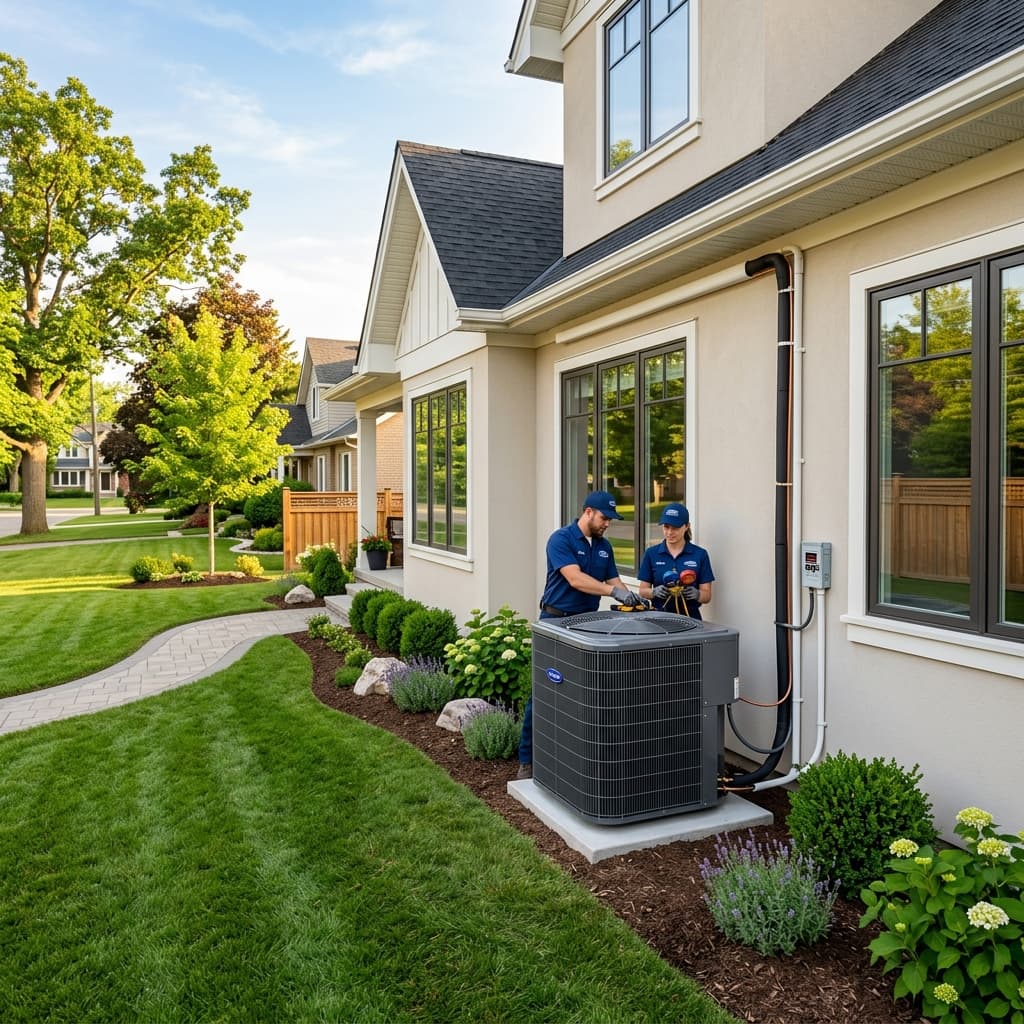
HVAC Sizing Guide 2026: Stop Guessing, Start Calculating
The definitive guide to sizing your air conditioner and furnace in 2026. Learn why the '500 sq ft per ton' rule is obsolete and how Manual J calculations ensure perfect sizing.
Read Article
HVAC 5 Min Read
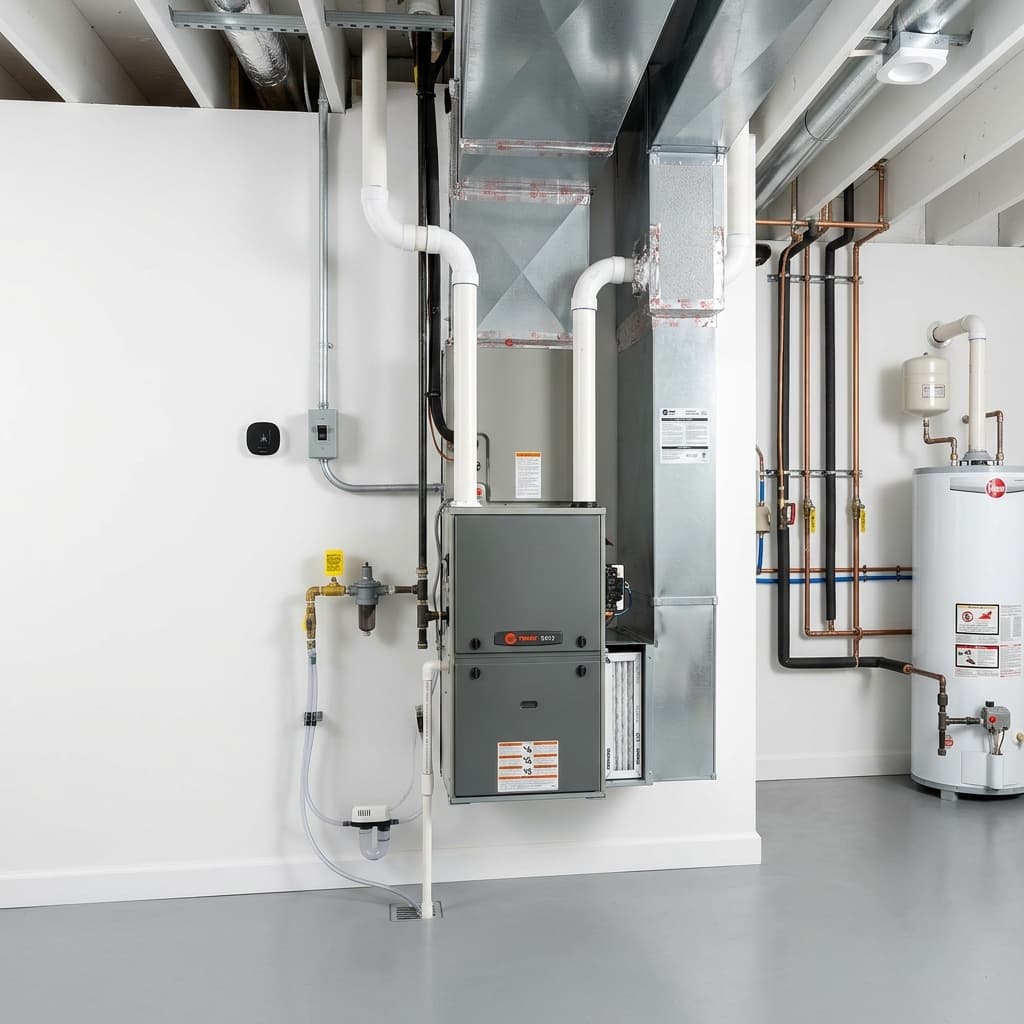
What is AFUE? Understanding Furnace Efficiency Ratings
A complete guide to AFUE (Annual Fuel Utilization Efficiency). Learn what the percentage means, the difference between 80% and 95% furnaces, and how to choose the right one in 2026.
Read Article
HVAC 5 Min Read
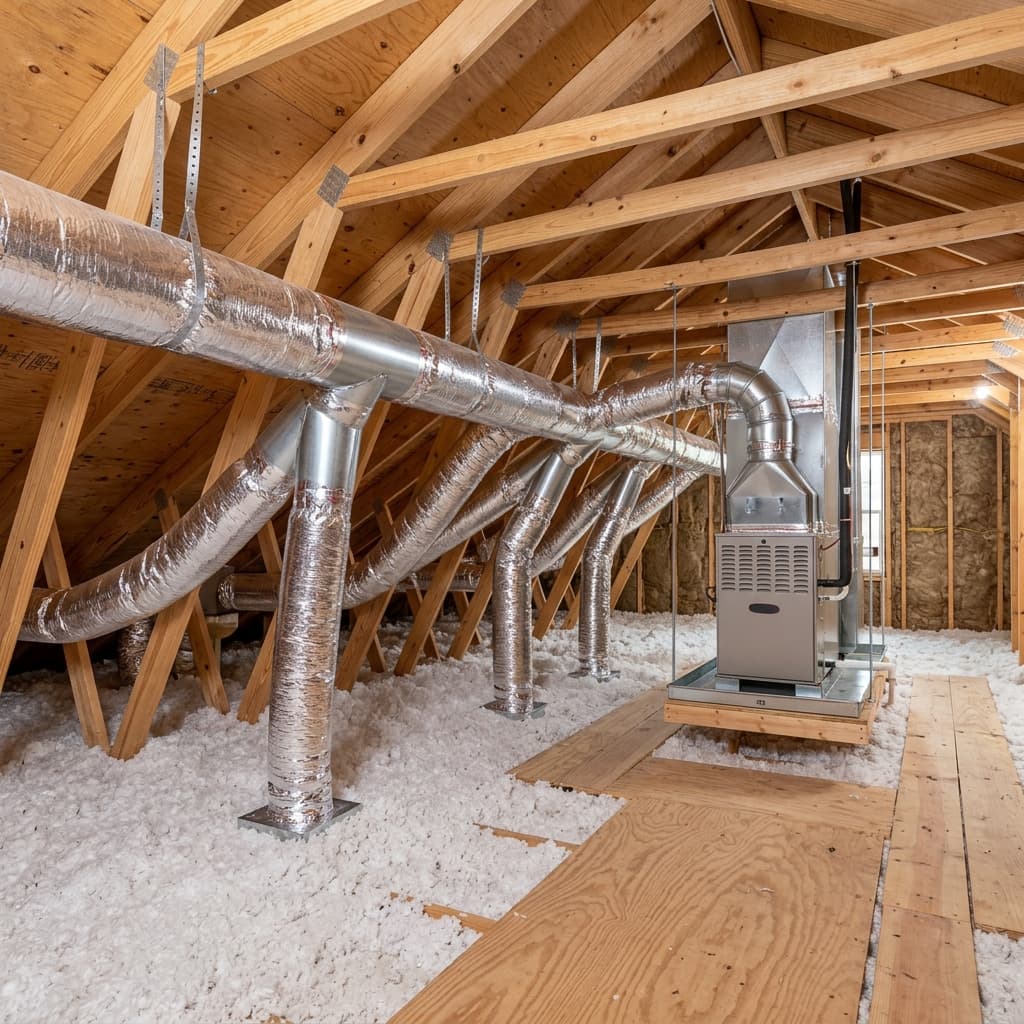
Ductwork Design (Manual D): The Unseen Key to HVAC Performance
Your HVAC system is only as good as its ductwork. Learn what ACCA Manual D is, why it's critical for airflow, and how improper ducts waste thousands in 2026.