Professional Concrete Strategy: From Subgrade to Finish
Concrete work is one of the most physically demanding and time-sensitive tasks in construction. Once the Ready-Mix truck arrives, you are on a "clock" that cannot be stopped. Our concrete calculator is designed to provide you with the mathematical foundation needed to manage this process without the stress of running short or the waste of over-ordering.
The Importance of a Rock-Solid Subgrade
The longevity of your concrete slab is determined long before the first shovel of wet material is poured. A professional-grade installation always starts with a compacted gravel sub-base. For a standard 4-inch patio, we recommend 4 inches of crushed stone (typically 3/4-inch minus). This base serves two vital functions: it provides a uniform, stable platform that won't settle under the weight of the concrete, and it acts as a capillary break to prevent moisture from the soil from being wicked into the slab. In cold climates, this drainage layer is the primary defense against "frost heave," which occurs when water in the soil freezes and expands, cracking the concrete from below.
Reinforcement: Rebar vs. Wire Mesh vs. Fiber
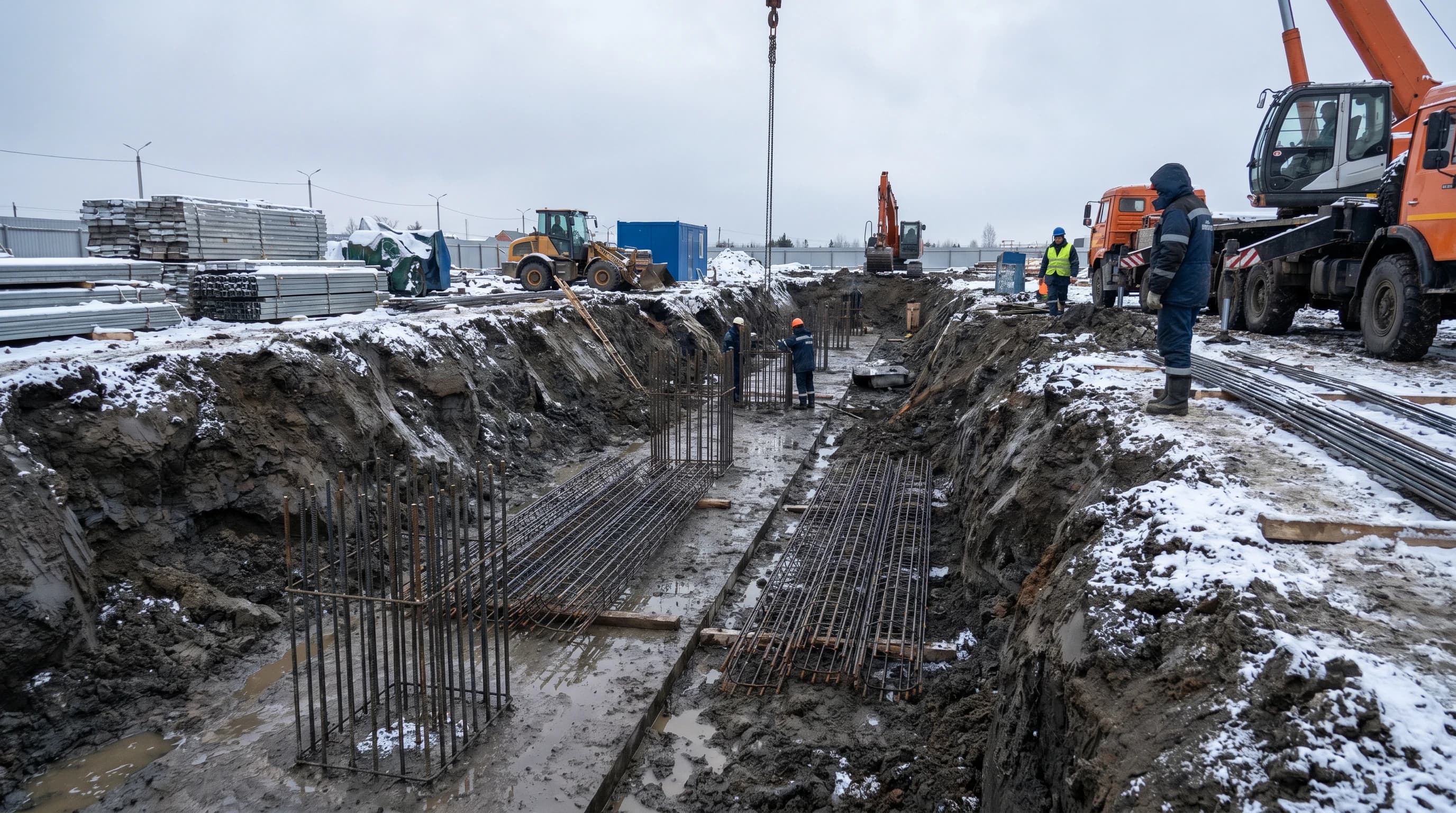
While concrete is incredibly strong in compression, it has very little tensile strength. This is where reinforcement comes in. Rebar (#3 or #4) is the gold standard for structural reinforcement, especially in driveways or heavy equipment pads. It should be placed in a grid (typically 12 or 16 inches on center) and suspended in the middle of the slab using plastic "chairs." Wire mesh is a lighter alternative suitable for small walkways or garden sheds to help control shrinkage cracks. Finally, fiber reinforcement—small synthetic or steel fibers mixed directly into the concrete—provides secondary reinforcement throughout the entire mass, significantly reducing the occurrence of micro-cracks during the critical first 24 hours of curing.
Finishing Techniques for a Professional Look
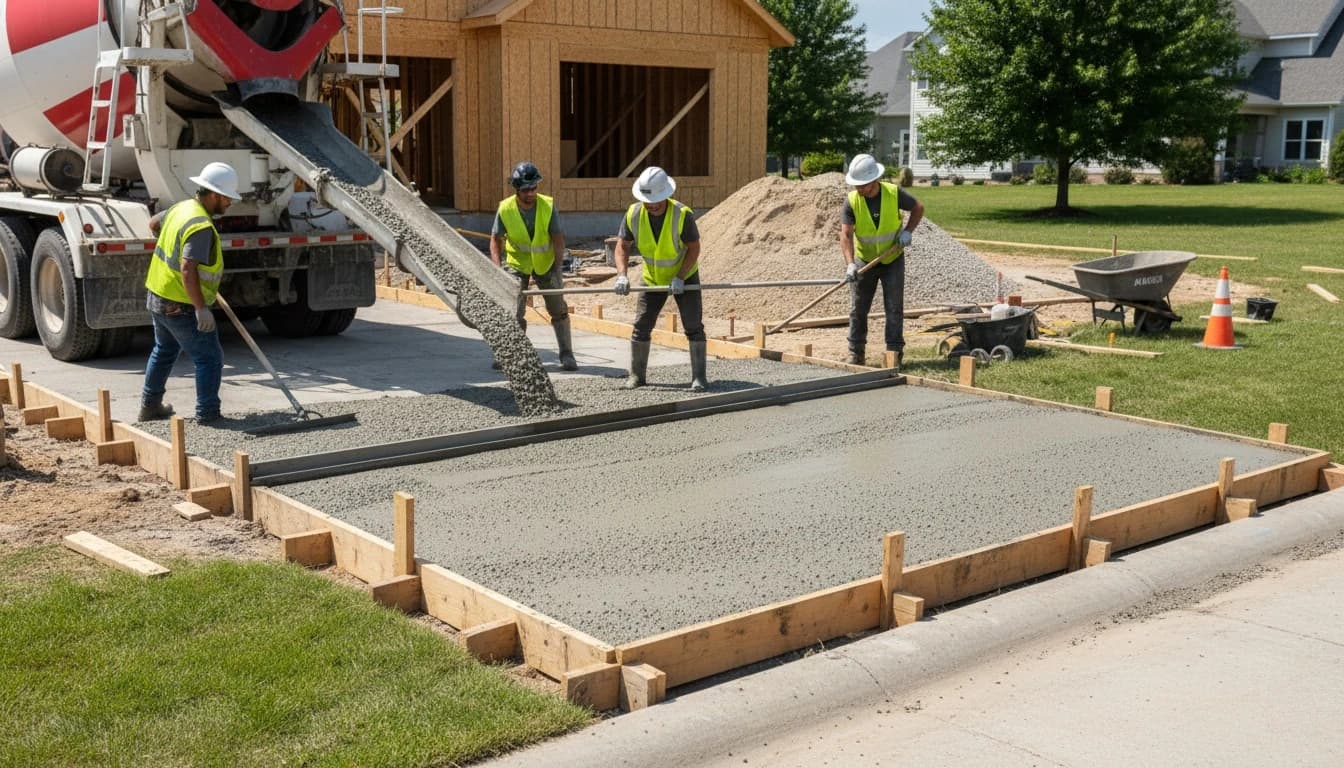
The "finish" of your concrete is what you will see for the next 40 years. For exterior slabs, a broom finish is the most common choice, providing a slip-resistant surface that is safe even when wet. For a more decorative look, consider exposed aggregate or stamped concrete, which mimics the appearance of stone or brick. Regardless of the style, the most important rule of finishing is timing. You must wait for the "bleed water" to disappear before you start your final passes. Troweling while water is still sitting on the surface forces that moisture back into the top layer of the slab, weakening it and leading to "spalling" or "dusting" where the surface peels off in thin layers.
Post-Pour Care: The Science of Curing
The most common mistake made by DIYers and even some contractors is walking away from the project the moment the concrete looks "dry." Concrete doesn't dry; it cures through a chemical process called hydration. This process requires water to be present in the slab for several days. If the water evaporates too quickly, the concrete will be brittle and prone to cracking. A professional installation includes "moist curing" for at least 7 days. This can be done by misting the slab with a hose several times a day, covering it with plastic sheets to trap moisture, or applying a specialized chemical curing compound. Proper curing can increase the final strength of your concrete by up to 50%.
Concrete Additives and Admixtures
Modern concrete technology allows us to modify the properties of the material using various chemical additives, known as admixtures. Accelerators (like calcium chloride) are used in cold weather to speed up the setting time, while retarders are used in hot weather to slow it down. Water reducers (plasticizers) allow for a high-slump, fluid mix without the strength-reducing effects of adding extra water. For exterior slabs in cold climates, air-entrainment is the most critical additive. It creates billions of microscopic air bubbles that provide space for water to expand when it freezes, preventing the surface from scaling or "spalling" over time.
Safety First: Handling Wet Concrete
Wet concrete is highly alkaline and can cause severe chemical burns to the skin and eyes. When working with concrete, always wear waterproof gloves, long-sleeved shirts, long pants, and safety glasses. If wet concrete gets into your boots or onto your skin, wash it off immediately with fresh water and pH-neutral soap. Additionally, be mindful of the weight of the material; moving a single cubic yard of concrete involves lifting and spreading 4,000 pounds of material. Proper lifting techniques and adequate help are essential to prevent back injuries and ensure the project is completed before the concrete begins to set.
Environmental Considerations and Disposal
Concrete has a significant environmental footprint due to the carbon emissions associated with cement production. You can reduce your project's impact by calculating your needs accurately with our tool to minimize waste. If you have leftover concrete, never dump it down storm drains or into natural waterways, as the high pH will kill aquatic life. Instead, pour any small remaining amounts into forms for "stepping stones" or allow it to harden in a container before disposing of it as construction debris. Many regions also have concrete recycling facilities that will crush old slabs into reusable aggregate for sub-bases.
Related Construction Tools
Ensure your project is fully estimated with these related HomeCalcPro construction calculators: