

Mini-Split Cost Estimator
Get a budget estimate for a new ductless mini-split system. Find the installed cost for a single-zone or multi-zone setup for your home. Professional-grade accuracy for your home projects.
How to use this calculator
Estimate the total cost to purchase and install a ductless mini-split system. Costs can vary based on brand, system capacity, number of indoor units (zones), and location.
Share This Professional Calculator
Found this helpful? Share it with your network to assist them with their home improvement projects.
Expert Guide to Mini-Split Cost Estimator
Plan your project with precision using our 2026 standardized calculator.
Step-by-Step Instructions
- 1
Choose Number of Indoor Zones
Select how many rooms or areas you want to heat and cool independently. Each room will require its own indoor unit (head). Multi-zone condensers can handle up to 8 indoor heads.
- 2
Select Total System Capacity
Input the combined BTU capacity of all indoor units. A common whole-home setup might range from 24,000 to 48,000 BTUs depending on your home's square footage and insulation.
- 3
Estimate Local Labor Rates
Choose your region's average labor rate. Mini-split installation is highly technical, involving refrigerant flare connections and deep vacuum testing, often accounting for 40-50% of the total cost.
- 4
Identify Electrical Needs
Specify if you need a new dedicated 240V circuit from your main panel. Many older homes require a sub-panel or service upgrade to handle the load of a large multi-zone system.
- 5
Calculate Total Budget
The tool provides a comprehensive budget estimate, including the outdoor condenser, indoor heads, line sets, and professional installation labor.
Pro Tips & Analysis
A ductless mini-split system consists of an outdoor condenser unit connected to one or more indoor air handlers (heads) by a small conduit containing refrigerant lines, a suction line, and electrical wires. This design completely eliminates the 20-30% energy loss common in leaky, uninsulated central duct systems. The heart of a modern mini-split is the inverter-driven compressor. Unlike standard systems that are either 100% "on" or 100% "off," an inverter system can vary its speed continuously to match the exact cooling or heating demand of the home. This leads to ultra-high efficiency, with many premium units exceeding 30 SEER2—double the efficiency of a standard central AC.
Multi-zone systems offer the ultimate in home comfort flexibility. A single outdoor unit can power multiple indoor heads, each with its own independent thermostat. This allows you to heat or cool only the rooms you are currently using, ensuring maximum comfort and minimum energy waste. When budgeting for a mini-split, it is important to look beyond the "sticker price" of the equipment. "Soft costs"—such as running new electrical lines, installing condensate pumps for interior walls, and adding line set covers (slim duct)—can easily add $1,500 or more to the final bill. However, with federal tax credits (25C) now offering up to $2,000 for qualifying heat pumps, the net cost of these high-performance systems has never been more attractive.
Another major advantage of mini-splits is their dehumidification capability. Because the indoor heads can run at very low speeds, the evaporator coil stays cold for longer periods, allowing it to extract much more moisture from the air than a traditional system that cycles on and off. Most units also feature a "Dry Mode" specifically designed for humid days when cooling isn't necessarily needed. Additionally, because there is no ductwork, mini-splits are the ideal choice for people with severe allergies or asthma, as they eliminate the dust and mold buildup often found in old, neglected duct systems. They are also incredibly quiet, with indoor noise levels as low as 19 decibels—quieter than a library.
Scientific Calculation Methodology
The estimated cost is a summation of the outdoor condenser price, individual indoor head costs, and a labor factor based on the number of zones.
Total Cost = (Condenser + (n × HeadPrice)) + (n × LaborPerZone)
Practical Example:
A 2-zone system with a 24k BTU condenser ($2,500), two heads ($800 each), and labor ($3,000) results in a total project cost of $7,100.
Achieving Precision Results
1
Mount indoor heads at least 7 feet high on a perimeter wall for the best air distribution and efficiency.
2
If you have low ceilings or sloped attic walls, consider a "floor-mounted" indoor unit instead of a standard wall unit.
3
Always install a "surge protector" on the outdoor unit; the sensitive inverter electronics are expensive to replace after a lightning strike.
4
Plan your condensate drainage carefully; interior wall mounts often require a noisy condensate pump, while exterior walls can use simple gravity drains.
5
Check if your electrical panel has space for a new dedicated 220V circuit (typically 20-40 amps depending on system size).
6
Hire a contractor who is "factory authorized" or "diamond certified" by the manufacturer to ensure you receive the full 10-12 year warranty.
7
Consider a "hyper-heat" or "cold-climate" model if you live in a region where winter temperatures regularly drop below 5°F.
Technical Fast Facts
- ✓Mini-splits avoid the 20-30% energy loss associated with traditional ductwork.
- ✓A multi-zone system allows for precise temperature control in up to 8 different rooms.
- ✓Inverter technology allows mini-splits to run at variable speeds for extreme energy efficiency.
- ✓Federal 25C tax credits can cover 30% of the cost (up to $2,000) of a high-efficiency heat pump mini-split.
- ✓Mini-splits require very small penetrations (3 inches) in your exterior walls, making them ideal for retrofits.
- ✓The average SEER2 rating for a ductless mini-split is significantly higher than that of a standard central AC.
- ✓Mini-splits can be used as a primary heat source in most US climates.
Expert Q&A
Explore Related Tools
Precision tools to complement your current calculation.
HVAC Load
Free Manual J load calculation. Get accurate BTU requirements for your home to choose the right size furnace and AC system. Avoid costly mistakes.
hvac heating cooling
AC Size (BTU)
Find the perfect air conditioner size. Our BTU calculator helps you determine the right cooling capacity for any room based on size and conditions.
hvac heating cooling
Duct Size
A free HVAC duct sizing calculator to determine the proper duct diameter for your system based on airflow (CFM). Ensure optimal performance.
hvac heating cooling
SEER Savings
Estimate your annual savings by upgrading to a high-efficiency AC unit. See your potential cost reduction and payback period with a new SEER2 system.
hvac heating cooling
In-Depth Guides
Expert insights and advice to help you make informed home decisions.
Read Article
HVAC 5 Min Read
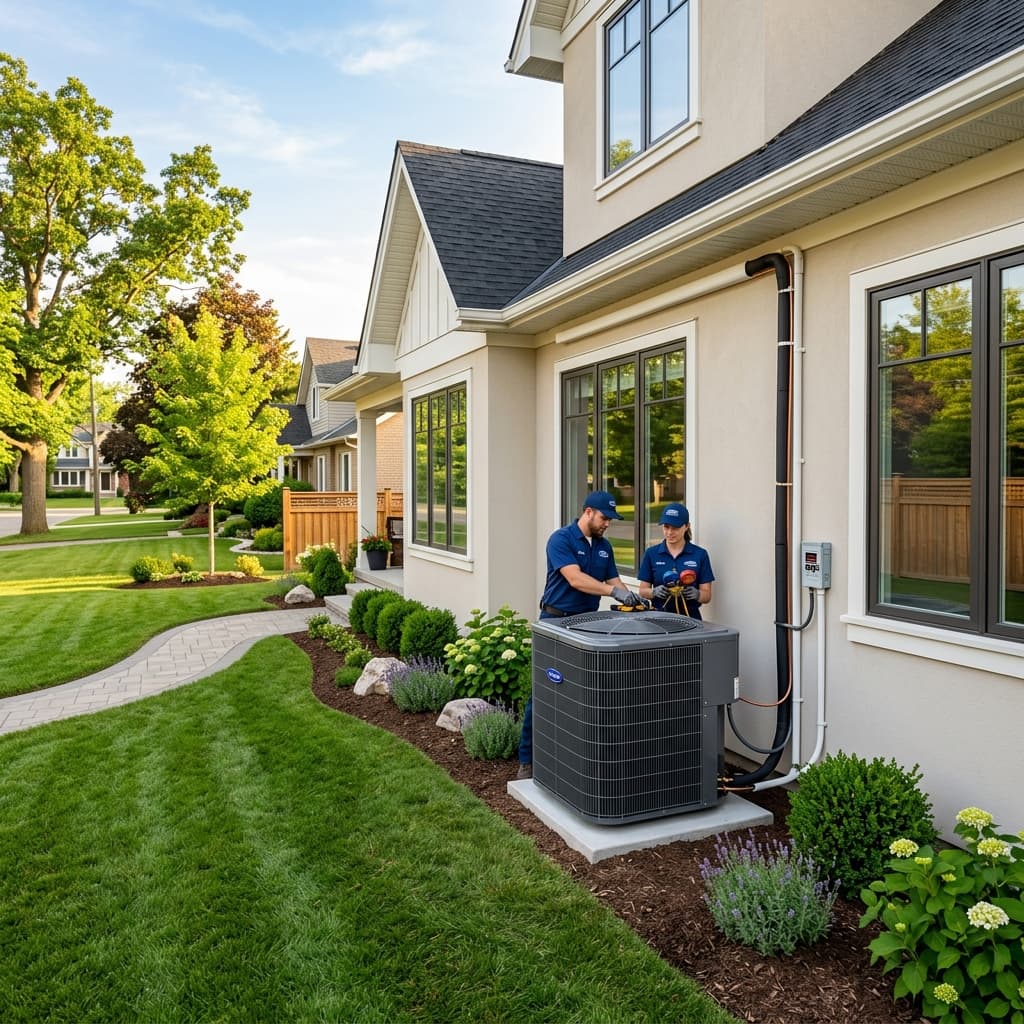
HVAC Sizing Guide 2026: Stop Guessing, Start Calculating
The definitive guide to sizing your air conditioner and furnace in 2026. Learn why the '500 sq ft per ton' rule is obsolete and how Manual J calculations ensure perfect sizing.
Read Article
HVAC 5 Min Read
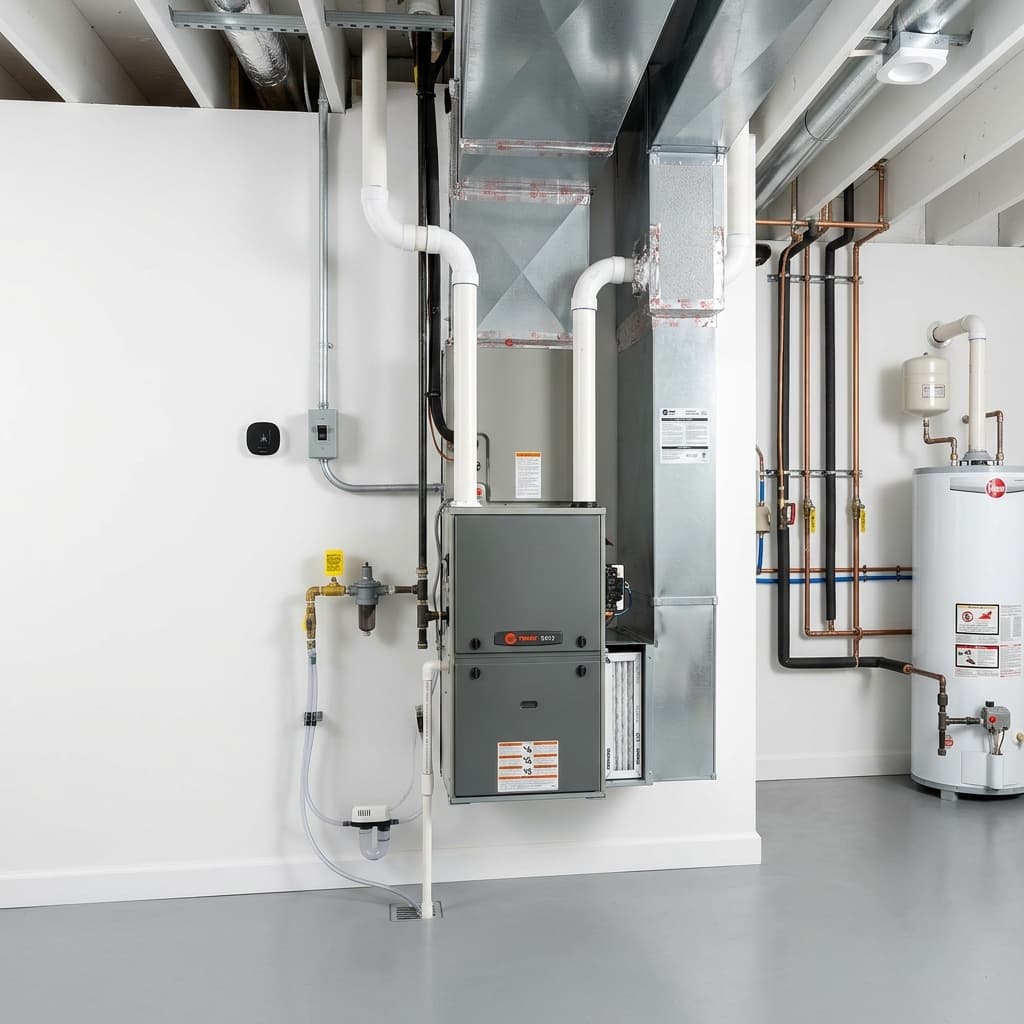
What is AFUE? Understanding Furnace Efficiency Ratings
A complete guide to AFUE (Annual Fuel Utilization Efficiency). Learn what the percentage means, the difference between 80% and 95% furnaces, and how to choose the right one in 2026.
Read Article
HVAC 5 Min Read
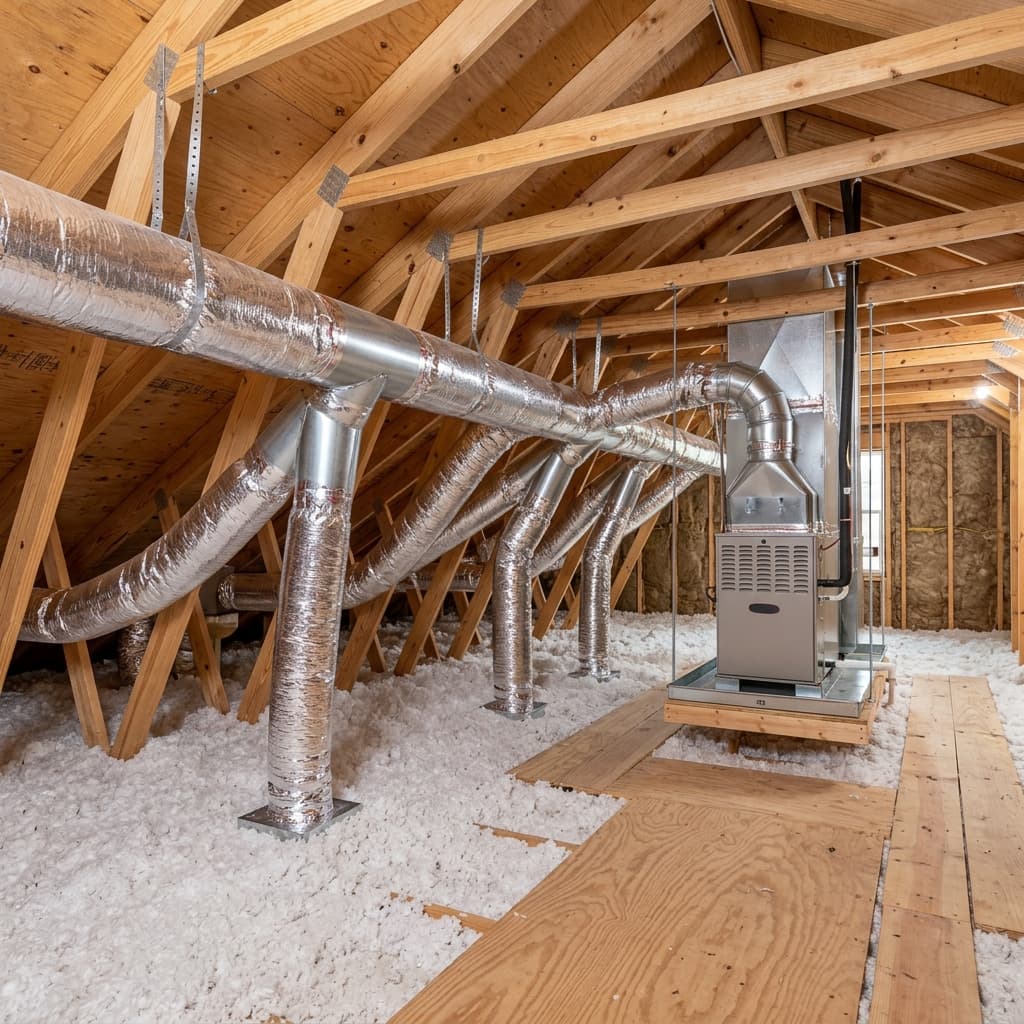
Ductwork Design (Manual D): The Unseen Key to HVAC Performance
Your HVAC system is only as good as its ductwork. Learn what ACCA Manual D is, why it's critical for airflow, and how improper ducts waste thousands in 2026.