

Carpet Calculator
Estimate how much carpet you need for your room. Accounts for standard roll widths and waste factors for a perfect installation. Professional-grade accuracy for your home projects.
Share This Professional Calculator
Found this helpful? Share it with your network to assist them with their home improvement projects.
Recommended Professional Tools
Precision-engineered calculators to streamline your most critical home project decisions.
Expert Guide to Carpet
Step-by-Step Instructions
- 1
Step 1: Measure Room Max Dimensions
Measure the longest length and widest width of your room. Always measure into closets and doorways, as the carpet needs to transition under the door.
- 2
Step 2: Select Carpet Roll Width
Choose the roll width provided by your retailer (standard is 12 feet, but 13.5 and 15 feet are also common).
- 3
Step 3: Account for Pattern Repeat
If your carpet has a pattern (like a trellis or floral design), you must add extra for "pattern matching" at the seams (usually 10-20%).
- 4
Step 4: Include Carpet Padding
The padding is usually sold in the same quantity as the carpet, though it is often slightly thinner for easier installation.
- 5
Step 5: Review Total Square Yards
Most retailers sell carpet by the "Square Yard" (9 sq ft). Our tool provides both square feet and square yards for your convenience.
Pro Tips & Analysis
The most critical aspect of a professional carpet job is Seam Placement. In rooms wider than the roll (e.g., a 16-foot wide room with a 12-foot roll), a seam is inevitable. Professionals try to place seams away from high-traffic areas and "pivot points" where feet turn, as these are the first places seams will fail. They also avoid placing seams directly in front of large windows where sunlight will highlight the transition. Our calculator helps you determine how much total material you need, but you should always sketch out your room to see where the "fill pieces" will go. Remember that all carpet in a single room must run in the same "Pile Direction"; if you rotate a piece 90 degrees to save money, the color will look completely different due to how light hits the fibers.
Don't overlook the Carpet Padding. The pad is the "foundation" of your carpet and determines how it feels and how long it lasts. For high-traffic areas, a denser, thinner pad is often better than a thick, soft one, which can cause the carpet backing to stretch and wrinkle over time. We recommend a "Rebond" pad with at least a 6lb to 8lb density for most residential applications. Our tool estimates the padding quantity to match your carpet order, ensuring your quote is comprehensive. Finally, remember that "Net Square Footage" is never enough. You should always add at least 10% for "cutting waste" to allow the installer to trim the carpet perfectly to the walls and tuck it into the tack strips.
Scientific Calculation Methodology
Square yards are calculated by taking the required roll length x roll width and dividing by 9.
Practical Example:
A 10x15 room using a 12-ft roll needs 12x15 = 180 sq ft. 180 / 9 = 20 sq yards.
Achieving Precision Results
Measure your room twice; a 1-inch mistake can mean the difference between a single piece and an ugly seam.
Vacuum your subfloor thoroughly before the pad goes down; even a small pebble will be felt through the carpet.
If you have pets, invest in a "moisture-barrier" pad that prevents liquid from soaking into the subfloor.
Check if your carpet price includes "Rip and Haul"—the removal and disposal of your old carpet.
Make sure your doors will still clear the floor once the new, thicker carpet and pad are installed.
Technical Fast Facts
- ✓Carpet is typically sold in 12-foot or 15-foot wide rolls.
- ✓Square yards are calculated by dividing the total square footage by 9.
- ✓Seams should be placed away from high-traffic "pivot points" in a room.
- ✓Higher-density carpet padding (6lb+) significantly extends carpet life.
- ✓Always run carpet pile in the same direction to avoid color mismatches.
Expert Q&A
Explore Related Tools
Precision tools to complement your current calculation.
Paint
Estimate how much paint you need. Calculate the gallons of paint required for your walls, ceiling, and trim for any room in your house.
Flooring
Calculate the square footage of flooring needed for your project. Works for tile, laminate, or hardwood, including a vital waste factor.
Siding
Estimate the total siding material needed for your home. Calculate the squares of vinyl, fiber cement, or wood siding for your project.
Wallpaper
Calculate the number of wallpaper rolls you need. Our estimator accounts for pattern repeat and waste, ensuring you buy the right amount.
In-Depth Guides
Expert insights and advice to help you make informed home decisions.
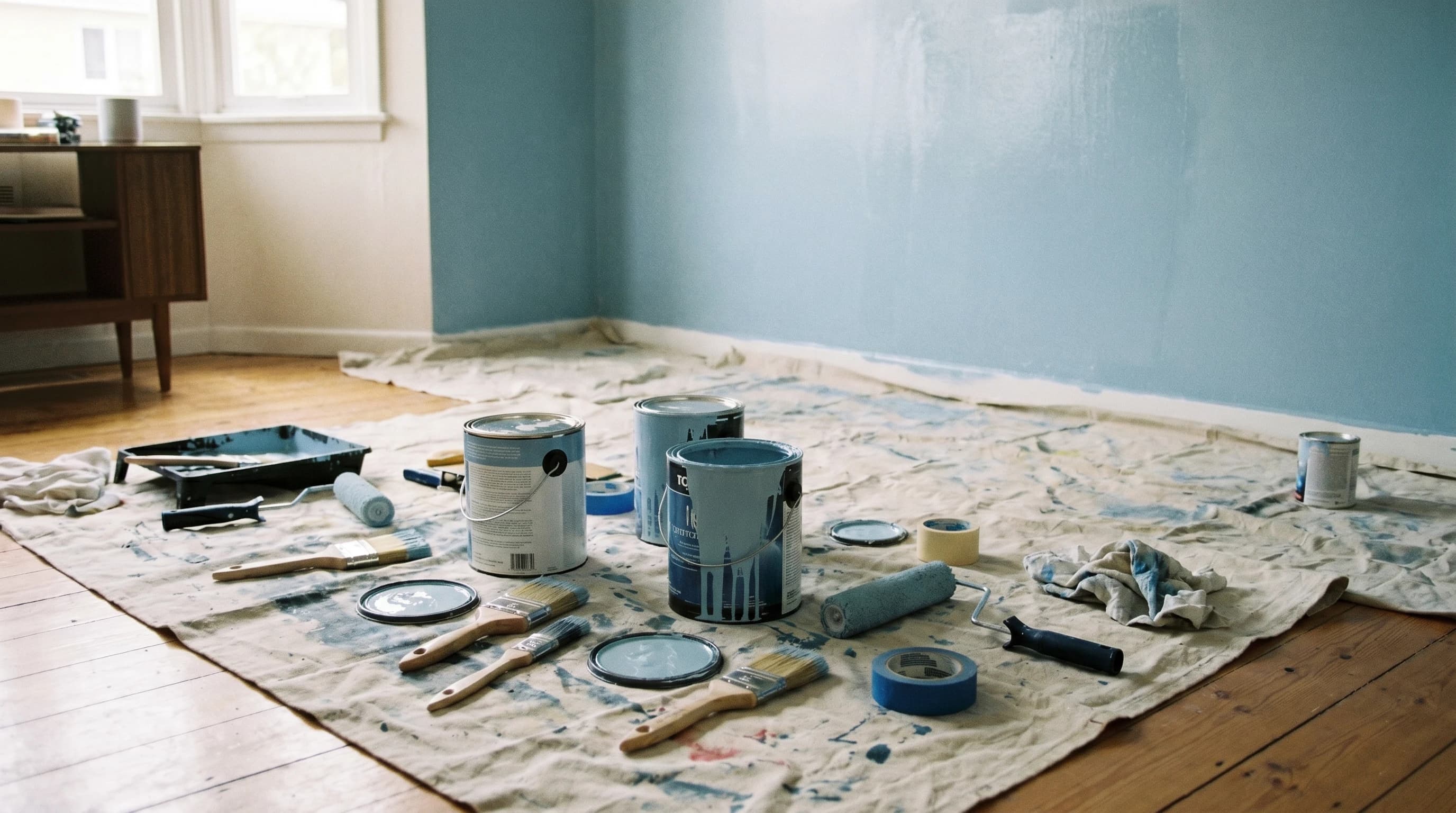
Paint Calculator Truth: Why 'Coverage' on the Can is Usually Wrong in 2026
Discover why the square footage on the paint can is a best-case scenario and how to calculate your real-world needs in 2026.
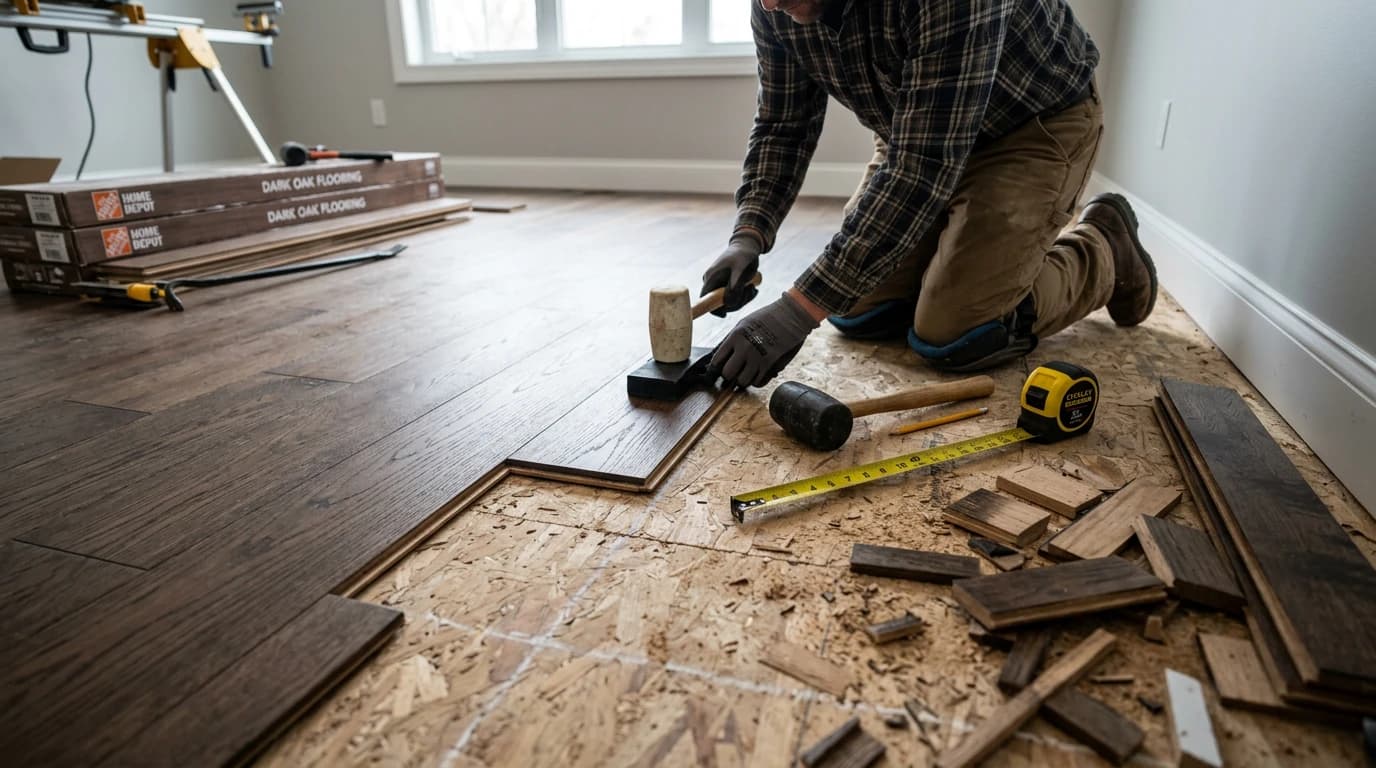
Flooring Waste Factor: Why You Need 10-15% Extra in 2026
Don't run out of flooring in 2026. Learn why you need 10-15% extra for waste, and why diagonal patterns or tile can require 20% or more.
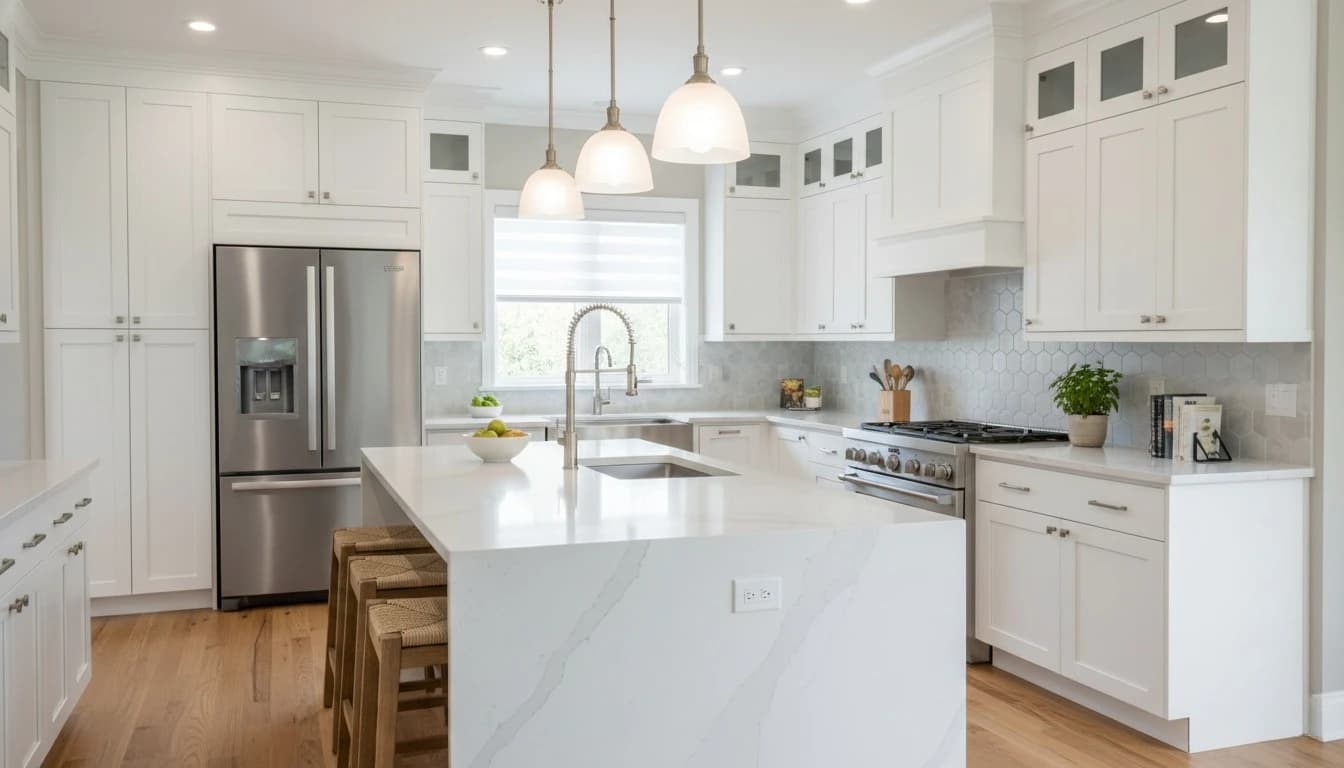
Kitchen Remodel Cost Guide 2026: Budgeting for Your Dream Space
The complete breakdown of kitchen renovation costs in 2026. From custom cabinetry to smart appliances, know where every dollar goes.