

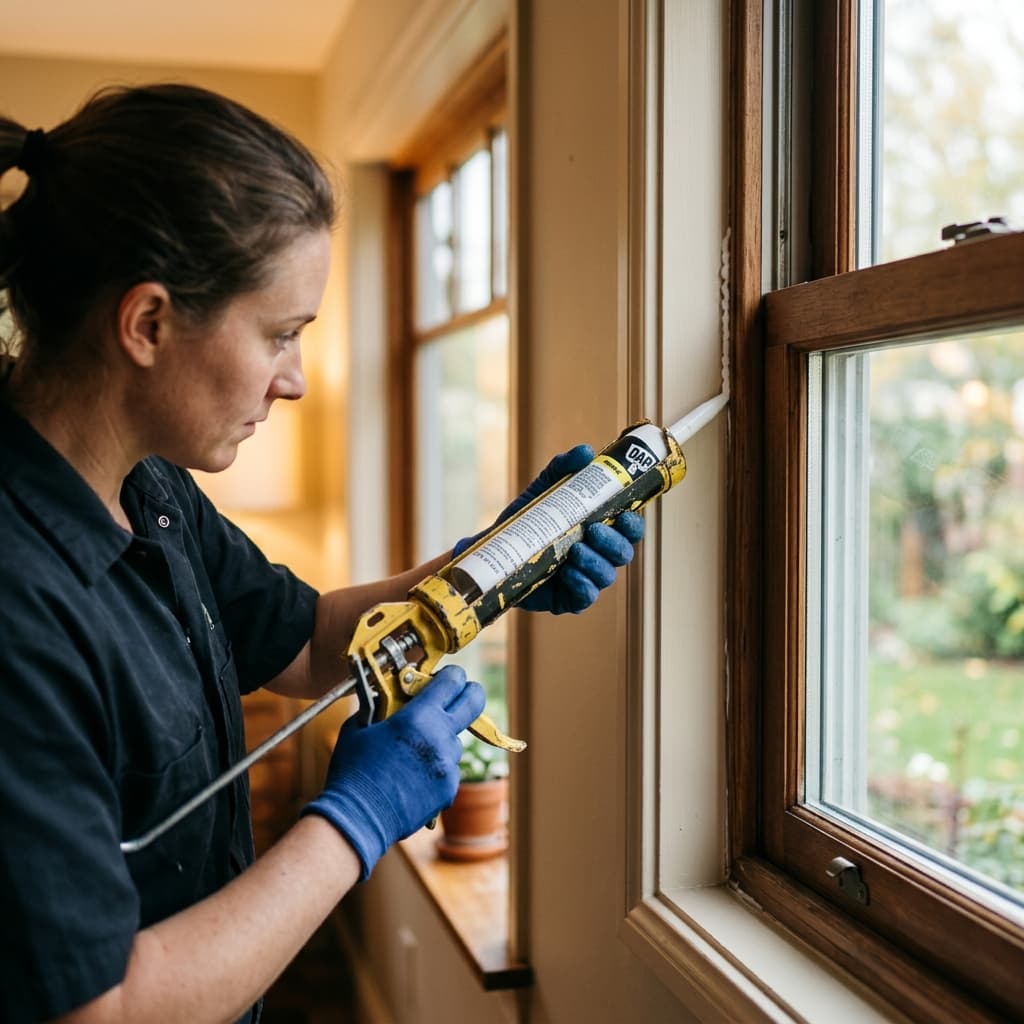
Air Sealing First: Why Caulking and Weatherstripping are Better Investments Than New Windows in 2026
Quick Answer: Air Sealing First: Why Caulking and Weatherstripping are Better Investments Than New Windows in 2026
Key Takeaways
- Air leakage can account for 25-40% of a home's heating and cooling costs—far more than heat loss through window glass.
- A professional energy audit with a blower door test is the best way to identify your home's biggest air leaks.
- Common air leak spots include recessed lights, electrical outlets, attic hatches, and gaps around pipes and wires.
- The cost to air seal a typical home ($300-$1,000) is a fraction of the cost of new windows ($10,000+) and often provides a much faster payback in energy savings.
- Always prioritize air sealing and adding insulation before considering expensive window replacements for energy efficiency.
Homeowners seeking to lower their energy bills often fixate on big-ticket items like new, energy-efficient windows or a high-SEER HVAC system. While these are important, they often overlook a much cheaper, more effective starting point: air sealing. Before you spend $15,000 on new windows, you should first spend $500 on spray foam and caulk. The return on investment is simply unmatched in the world of home improvement.
The Physics of Air Leakage: Understanding the Stack Effect
The "envelope" is the physical barrier between the conditioned air inside your home and the unconditioned air outside. It consists of two distinct layers: the thermal boundary (insulation) and the pressure boundary (air barrier). Ideally, these two should be in perfect alignment. In reality, most homes have massive gaps in the pressure boundary. This means your expensive heated or cooled air is literally leaking out, driven by stack effect and wind.
To understand why air sealing is so critical, you must understand the Stack Effect. In the winter, the warm air inside your home is less dense than the cold air outside. This warm air rises, creating pressure at the top of your house. It searches for every tiny crack in your ceiling—recessed lights, attic hatches, plumbing stacks—and escapes into the attic.
As this warm air leaves through the top, it creates a vacuum at the bottom of the house. This vacuum sucks in cold, dry air from your basement, crawlspace, and electrical outlets. This constant cycle means you are effectively paying to heat the great outdoors, while your HVAC system works double-time to keep up with the cold air being pulled in at your feet.
Where the Money is Escaping: The Top 5 Culprits
Air leaks are rarely where people think they are. While you might feel a draft at a window, the largest "holes" in your home are typically invisible, hidden behind drywall and under insulation.
- Attic Top Plates: This is the gap where the interior walls of your home meet the attic floor. Every single wall in your house has a gap at the top that acts like a chimney.
- Recessed "Can" Lights: Standard recessed lights are essentially 6-inch holes cut directly into your ceiling. They are almost never airtight and act as massive conduits for heat loss.
- The Rim Joist: In your basement or crawlspace, the area where the wooden frame sits on the concrete foundation is notoriously leaky. It is the primary entry point for spiders, crickets, and cold drafts.
- Plumbing Chases: The large gaps around bathtub drains and main sewer stacks often run from the basement all the way to the attic, creating a literal wind tunnel inside your walls.
- Knee Walls: In finished attics, the short walls (knee walls) often have massive air leaks behind them where the floor joists aren't properly blocked.
| Location | Leakage Severity | Ease of Fix | Best Material |
|---|---|---|---|
| Attic Top Plates | Critical | Difficult (Attic Access) | Expandable Spray Foam |
| Rim Joists | High | Moderate (Basement) | Rigid Foam + Spray Foam |
| Windows/Doors | Low to Moderate | Easy | Caulk & Weatherstripping |
| Electrical Outlets | Low | Easy | Foam Gaskets |
Air Sealing vs. New Windows: The ROI Comparison
New windows are a popular "energy-saving" project, but the math rarely checks out for energy alone. A standard window replacement for an average home costs between $10,000 and $20,000. This might save you $150 per year on energy. That is a 60+ year payback period.
In contrast, a comprehensive air sealing project—even if performed by a professional—typically costs between $1,500 and $3,000. If done correctly, it can save you 15% to 20% on your total heating and cooling costs. In a home with a $2,500 annual energy bill, that's $500 in annual savings, resulting in a 3 to 6 year payback period. Air sealing is 10 times more cost-effective than window replacement.
The Professional Energy Audit: Testing, Not Guessing
How do you find these invisible leaks? You can't just look for them; you have to use physics. A professional home energy auditor uses a Blower Door Test. They seal a large, calibrated fan into your front door and pull the air out of the house. This depressurizes the building and forces outdoor air to whistle through every crack and gap. The auditor then uses:
- Thermal Imaging Cameras: To see the "cold plumes" of air entering through walls and ceilings.
- Smoke Pencils: To visually track air movement around recessed lights and top plates.
- Manometers: To measure the "ACH50" (Air Changes per Hour at 50 Pascals)—a scientific score of your home's air-tightness.
Safety Warning: Backdrafting
DIY Air Sealing Checklist: Where to Start
If you're comfortable in an attic or a crawlspace, you can perform significant air sealing yourself. Focus on these areas in this specific order for the best results:
- The Attic Hatch: Glue a piece of rigid foam board to the top of the hatch and add weatherstripping around the perimeter where the hatch rests on the trim.
- Plumbing Stacks: Look for the large PVC pipe that goes through your attic floor. There is usually a 1-2 inch gap around it. Use expandable spray foam to seal it.
- The Rim Joist: In the basement, cut pieces of 2-inch rigid foam board to fit in the bays where the floor joists meet the outer wall. Use spray foam to "picture frame" around the edges.
- Electrical Gaskets: Install inexpensive foam gaskets behind the faceplates of all outlets and switches on your exterior walls.
Impact on IAQ and Humidity Control
A major misconception is that a "leaky" house is a "healthy" house because it "breathes." In reality, a leaky house is an uncontrolled house. When air leaks into your home through the rim joist or the attic, it isn't fresh air. It is air that has been filtered through fiberglass insulation (a known respiratory irritant), dusty framing, and crawlspaces where mold or radon may be present. By air sealing, you stop this accidental intake of poor-quality air. You can then use a dedicated mechanical ventilation system (like an ERV) to bring in truly fresh, filtered air from a known location. Furthermore, air sealing is the most effective way to manage indoor humidity in the summer; by keeping the hot, humid outdoor air out, your AC system can much more easily maintain a comfortable 45-50% relative humidity level.
Building Durability: Preventing Rot
Air sealing isn't just about energy; it's about protecting the structure of your home. In the winter, warm, moist indoor air that leaks into a cold attic will condense on the underside of the roof deck. This leads to moisture buildup, mold growth on rafters, and eventual wood rot. Many "roof leaks" are actually just internal air leaks that are condensing in the attic. By sealing the attic floor, you prevent this moisture from ever reaching the cold surfaces of your roof, significantly extending the life of your home's structural components.
Conclusion: The Path to a High-Performance Home
Air sealing is the "unsexy" secret of high-performance homes. It is the foundation upon which all other energy improvements are built. If you add insulation without air sealing, you are just putting a sweater over a windbreaker. If you buy a new HVAC system without air sealing, you are buying a bigger engine for a car with a hole in the gas tank.
Imagine wearing a thick wool sweater on a windy winter day. The wind cuts right through it, and you feel cold despite the insulation. Now, imagine putting a thin windbreaker over that sweater. Suddenly, you are warm. The windbreaker is the air seal; the sweater is the insulation. You need both, but if you don't stop the air movement first, the insulation is nearly useless.
Start with a Manual J Load Calculation to see how much your current air leakage is costing you, and then begin the process of plugging the holes. Your wallet—and your comfort—will thank you.
Official Sources & Resources
Frequently Asked Questions
About the Author: Jameson Miller
Jameson Miller has over 15 years of experience in the home construction and finance industries. As a lead consultant for major residential projects and a certified financial analyst, he specializes in making complex home improvement decisions simple and data-driven. His work ensures that HomeCalc Pro provides homeowners with the most accurate, industry-standard calculations available today.