

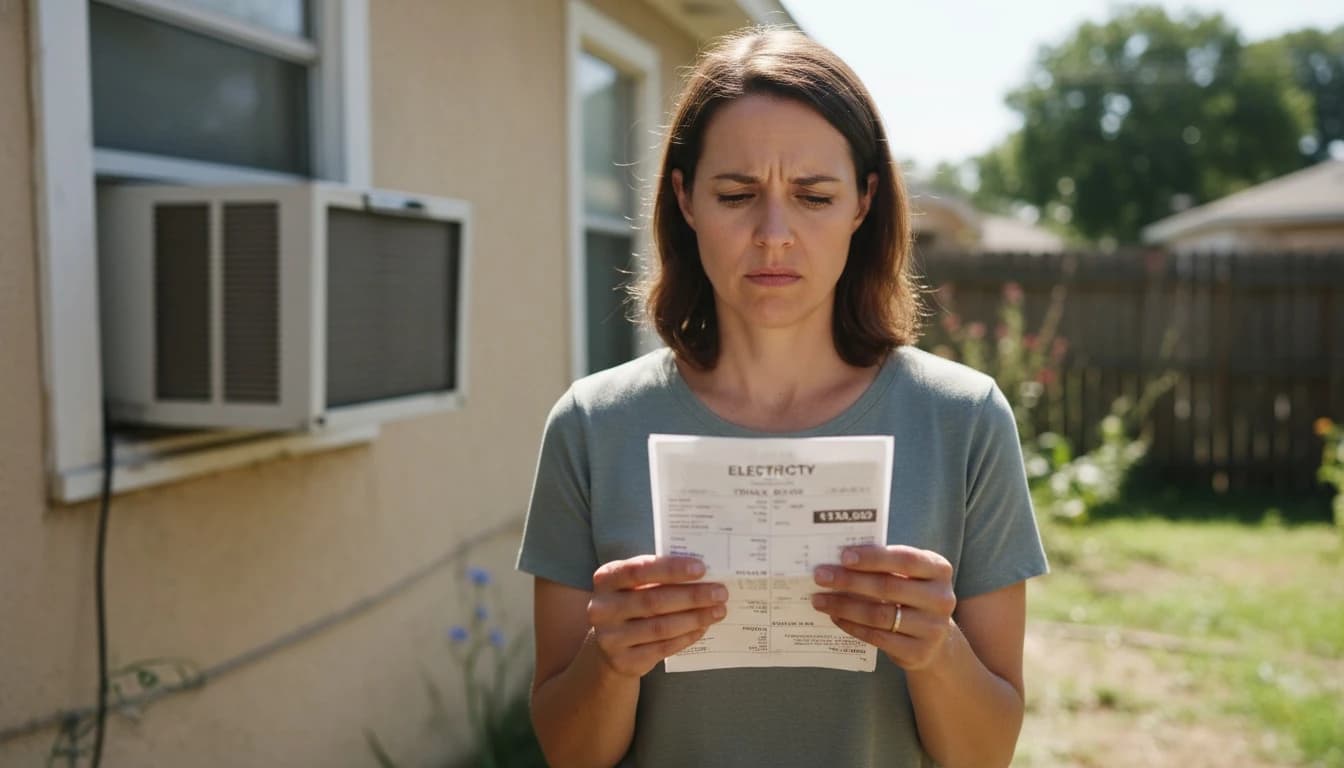
The True Cost of a Low SEER AC Unit in 2026
Quick Answer: The True Cost of a Low SEER AC Unit in 2026
Key Takeaways
- SEER (Seasonal Energy Efficiency Ratio) measures an AC unit's energy efficiency; SEER2 is the new standard (as of 2023) using a more realistic test procedure.
- A low SEER unit (e.g., SEER 10-13) can cost 50% to 100% more to operate annually compared to a high SEER unit (e.g., SEER 18-21).
- The true cost of a low SEER unit is a combination of high utility bills, poor dehumidification (comfort cost), and potential premature system failure (maintenance cost).
- The average homeowner can see the extra investment in a high SEER unit paid back through energy savings in 5 to 8 years.
- Newer, high-efficiency systems are typically required to use R-410A or R-32 refrigerant, avoiding the scarcity and high cost of phased-out refrigerants like R-22.
Introduction: Looking Beyond the Sticker Price
When standing at the counter of an auto parts store, buying the cheapest oil filter might save you $5. But buying the cheapest HVAC system for your home can cost you thousands of dollars over the next decade. In the world of air conditioning, the "cheapest" option is almost always the most expensive one to own.
The efficiency of your unit, measured by its SEER rating, dictates your operating costs for the next 15 years. A "bargain" low-efficiency unit acts like a hole in your wallet, leaking money to your utility company every single month.
Moreover, the Department of Energy (DOE) and the checks-and-balances of the market are shifting. With the new SEER2 standards introduced in 2023, the bar has been raised. Understanding these metrics is no longer just for engineers; it is essential for any homeowner who wants to make a financially sound decision.
In this guide, we will analyze the three hidden costs of choosing a low SEER AC unit—Financial, Comfort, and Maintenance—and explain why "spending more to save more" isn't just a sales pitch.
What is SEER (and the New SEER2 Standard)?
SEER stands for Seasonal Energy Efficiency Ratio. It is the absolute benchmark for measuring the efficiency of residential air conditioners and heat pumps. If you think of your HVAC system like a car, the SEER rating is equivalent to its miles-per-gallon (MPG) rating. It tells you exactly how much "cooling bang" you get for your "electrical buck."
Mathematically, it is the ratio of cooling output divided by electrical energy input over a typical cooling season:
The higher the number, the more cooling you get for every dollar of electricity you spend. For decades, the industry standard was a 10 SEER unit. Today, the legal minimum has risen to 14.3 SEER2 in most of the United States, with premium systems reaching as high as 26 SEER2.
The SEER Rating Scale: From budget to Premium
Understanding where a unit falls on the efficiency spectrum is critical for budgeting. Here is a breakdown of the modern SEER landscape:
- 13-14 SEER2 (Entry Level): These are the "builder grade" units. They are the least expensive to buy but the most expensive to run. They typically use a single-stage compressor (all-on or all-off).
- 15-17 SEER2 (Mid-Efficiency): This is the "sweet spot" for many homeowners. These units often feature two-stage compressors, which allow the unit to run at a lower, more efficient speed on mild days.
- 18-20 SEER2 (High-Efficiency): These systems almost always use Inverter Technology (variable speed). They can adjust their output in 1% increments, providing perfect temperature control and massive energy savings.
- 21+ SEER2 (Ultra-Premium): These are the most advanced machines on the planet. They offer the highest possible efficiency and include advanced features like built-in air purification and extreme sound dampening.
The Mandatory Shift to SEER2 (M1 Testing)
As of January 1, 2023, the Department of Energy officially retired the old SEER testing standard in favor of SEER2. The reason for this change was simple: the old test was too easy. It tested units against very low "static pressure" (airflow resistance), assuming the home had perfect, oversized ductwork—a reality that exists in fewer than 10% of American homes.
The new SEER2 standard (known as M1 testing) increases the external static pressure by 500% during the test. This more accurately simulates a real-world home with standard ducts and a dirty air filter. Because the test is harder, the numbers on the labels dropped. A unit that was previously rated at 14 SEER is now roughly equivalent to a 13.4 SEER2 unit. It is the same piece of equipment; the new label just reflects a more honest assessment of how it will perform in your actual house.
1. The Financial Cost: Energy Bills and the ROI Equation
The single biggest mistake homeowners make when buying a new air conditioner is focusing exclusively on the Sticker Price. The purchase and installation of the equipment actually only accounts for about 15% of the total money you will hand over to keep that unit running for its 15-year lifespan. The other 85% goes directly to your utility company in the form of monthly energy bills.
When you choose a low SEER unit to save $2,000 today, you are essentially signing a contract with your power company to pay them an extra $300 to $500 every year for the next 15 years. Over time, that "bargain" unit becomes the most expensive item in your home.
The Cost of Installation by SEER Rating (2026 Estimates)
To help you budget, here are the average installed costs for a 3-ton central air conditioning system across the different efficiency tiers. Note that these prices include the condenser, the indoor coil, and professional labor.
| Efficiency Tier | Avg. Installed Cost | Monthly Operating Cost |
|---|---|---|
| 14.3 SEER2 (Standard) | $5,500 - $7,500 | Highest ($$$) |
| 16-17 SEER2 (Mid-Range) | $7,500 - $10,500 | Moderate ($$) |
| 18-20 SEER2 (High-End) | $11,000 - $15,000 | Low ($) |
| 22+ SEER2 (Ultra-Premium) | $16,000+ | Lowest ($) |
Energy Savings Comparison: A Real-World Example
Let's look at the actual dollar impact of upgrading. Imagine you are replacing an old, failing 10 SEER unit in a region with hot summers (approx. 2,400 cooling hours per year) and an electricity rate of $0.16 per kWh.
| System Efficiency | Annual Cost ($0.16/kWh) | 15-Year Operating Cost | Lifetime Savings vs Old |
|---|---|---|---|
| Old 10 SEER | $1,152 | $17,280 | - |
| New 14.3 SEER2 | $805 | $12,075 | $5,205 |
| New 20 SEER | $576 | $8,640 | $8,640 |
Moving to the 20 SEER system saves nearly $9,000 in electricity over the life of the system. Even if the 20 SEER unit costs $4,000 more upfront, the Return on Investment (ROI) is over 100%.
2. The Comfort Cost: Humidity and Short-Cycling
If financial savings aren't enough, consider your comfort. Low SEER units are typically "Single-Stage" machines. They have two gears: 100% ON (Full Blast) or OFF.
This leads to Short-Cycling:
- The AC turns on and blasts freezing air.
- The thermostat satisfies in 10 minutes.
- The AC shuts off.
- Humidity has not been removed, leaving the air clammy.
High SEER units (18+) are often "Inverter Driven" or Variable Speed. They can run at 40% capacity for long periods. This "low and slow" approach is the holy grail of comfort. It scrubs humidity out of the air continuously and prevents the hot/cold temperature swings of single-stage units.
3. The Maintenance Cost: Wear & Tear
Imagine driving your car in city traffic: Stop. Go. Stop. Go. Now imagine driving on the highway at a steady speed. Which causes more wear on your engine and brakes?
Single-stage (Low SEER) units are the city drivers. The most stress an electric motor faces is startup torque (the "inrush current"). A unit that cycles on and off 50 times a day takes a beating.
Variable speed (High SEER) units "soft start" gently and run for hours at low speed. This reduces mechanical stress on the compressor and the electrical strain on the capacitors, often leading to longer system life.
The "Builder Grade" Trap
Why are 14 SEER units so common? Because they are the legal minimum. Builders love them because they are cheap. They install the unit that passes code for the lowest possible cost, leaving you (the buyer) to pay the high electric bills for the next decade.
Do not accept "Builder Grade" as the standard for your home. It is the floor, not the ceiling.
Rebates & Tax Credits: The Equalizer
The upfront cost gap between low and high efficiency is shrinking thanks to the Inflation Reduction Act (IRA).
- 25C Tax Credit: You can claim 30% of the project cost (up to $600 for AC, $2,000 for Heat Pumps) on your federal taxes.
- Utility Rebates: Many power companies offer $300-$1,000 rebates for installing high-seer equipment to reduce grid strain.
When you factor in $2,000+ in incentives, the premium system often costs nearly the same as the budget system.
When Does Choosing a Low SEER Unit Actually Make Sense?
While we generally advocate for high-efficiency systems, there are a few specific scenarios where a standard 14.3 SEER2 unit is actually the more logical financial choice:
- The "Starter Home" or Short-Term Stay: If you know with absolute certainty that you will be moving out of your home in the next 2 to 3 years, you will not be around long enough to reach the "break-even" point of a high-efficiency system. In this case, saving the $4,000 upfront is the better move.
- Rental Properties: For landlords who do not pay the utility bills, the financial incentive for high efficiency is lower. A standard unit satisfies the lease requirement for "working AC" for the lowest possible capital expenditure. (However, some landlords use high SEER units as a marketing perk to attract long-term tenants).
- Mild Climates: If you live in a region where you only run your AC for 400 or 500 hours a year (like parts of the Pacific Northwest), your total electricity bill is already so low that even a 50% savings only equals a few dollars a month. The payback period for a premium unit could be 30 years—longer than the unit will last.
The Impact on Home Resale Value: A Hidden Asset
In today's real estate market, homebuyers are increasingly tech-savvy and energy-conscious. When a prospective buyer walks through your home, one of the first things they check is the age and efficiency of the HVAC system. A "Builder Grade" 14 SEER unit installed two years ago is seen as a baseline requirement. However, a premium 20 SEER2 variable-speed system is a major selling point.
Studies have shown that homes with high-efficiency upgrades sell faster and for a higher premium (often 2-4% more) than homes with standard equipment. Buyers love the idea of "low utility bills" being locked in for the future. By investing in a high SEER unit now, you aren't just saving money on your monthly bills; you are building equity in your home that you will likely recoup when you decide to sell.
The Final Verdict: Investment vs. Expense
We recommend looking at an HVAC replacement not as an annoying home repair, but as a long-term financial instrument. You are choosing between two different ways to pay for your comfort:
- The Budget Approach: Low upfront cost today, but you are effectively "financing" the rest of the cost through your high monthly utility bills for the next 15 years.
- The Value Approach: Higher upfront cost today, but you are "pre-paying" for your comfort and locking in a much lower monthly operating cost that is immune to rising energy prices.
Before you sign a contract, always ask your HVAC company for a "Total Cost of Ownership" (TCO) analysis. If they cannot provide one, use our SEER Savings Calculator to run the numbers yourself. You might find that the "expensive" unit is actually the one that puts the most money back in your pocket over time.
Sources
Frequently Asked Questions
About the Author: Jameson Miller
Jameson Miller has over 15 years of experience in the home construction and finance industries. As a lead consultant for major residential projects and a certified financial analyst, he specializes in making complex home improvement decisions simple and data-driven. His work ensures that HomeCalc Pro provides homeowners with the most accurate, industry-standard calculations available today.